

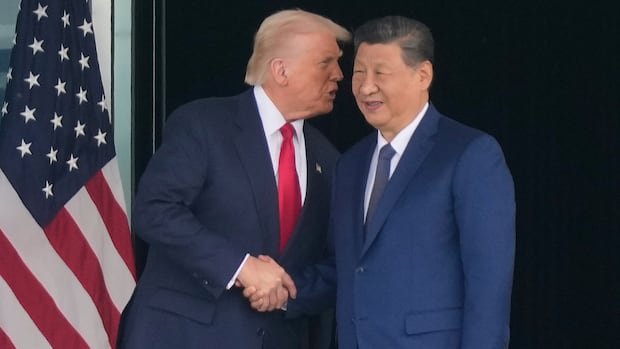

President Donald Trump’s recent deal with China, much like his previous business transactions, is high on enthusiasm but lacking in specifics. Following his meeting with Chinese President Xi Jinping, Trump hailed the event as exceptional, giving it a rating of 12 out of 10. He announced that China would be purchasing significant quantities of soybeans and hinted at the potential for a substantial oil and gas deal involving Alaska.
However, looking beyond Trump’s optimistic language, analysts view the agreement as more of a temporary truce in the ongoing trade war rather than a definitive resolution. The official agreement between the U.S. and China primarily involves scaling back some of the tariffs and retaliatory actions that have been exchanged since Trump’s presidency.
According to Dennis Wilder, a professor at Georgetown University, the U.S. and China have been engaged in a strategic standoff, with neither side gaining a clear advantage. Wilder characterized the current situation as a pause in the trade conflict, emphasizing that a complete resolution is still distant.
As part of the agreement, Xi pledged to crack down on the supply of chemicals used in producing fentanyl, prompting Trump to reduce tariffs on Chinese exports to the U.S. by 10 percentage points. This reciprocal action is mirrored by Trump’s decision to raise tariffs on Canadian products due to a disagreement over anti-tariff advertising by the Ontario government.
The easing of tensions is conditional, with further tariff reductions hinging on China’s progress in combating fentanyl trafficking. Additionally, China agreed to ease export restrictions on rare earth minerals and end the boycott on U.S. soybeans. These concessions mark a return to the pre-trade war status quo.
In another aspect of the deal, the U.S. agreed to postpone stricter export controls on high-end semiconductors and suspend port fees on Chinese vessels. This series of concessions is viewed as a strategic move by China, positioning the country favorably in the ongoing trade negotiations.
The average tariff rate on Chinese imports to the U.S. is now set at 47%, a significant decrease from the peak of 145% imposed earlier. This shift in strategy by Trump is likely influenced by changing public opinion on tariffs in the U.S.
While the focus remains on the U.S.-China dynamics, experts suggest that Canada could learn from China’s leverage tactics in dealing with trade disputes. Despite lacking significant leverage like China, Canada’s strong trading relationship with the U.S. presents opportunities for strategic negotiations.
Despite the impact of Trump’s tariffs on reducing the trade deficit with China, the long-term effects on U.S. manufacturing and job growth remain uncertain. The trade deal signifies a tactical truce rather than a definitive resolution to the trade tensions between the two global powers.