

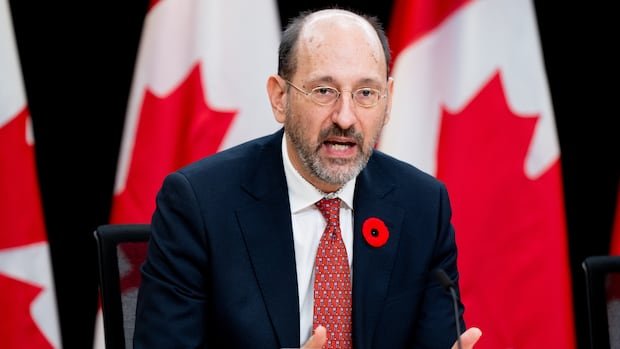

Ottawa’s decision to allocate $1.3 billion for constructing a new hospital for inmates in New Brunswick has been criticized by Correctional Investigator of Canada Ivan Zinger as a significant misallocation of resources. Zinger, the ombudsman for inmates in the federal correctional system, suggests that the government should instead collaborate with provincial facilities for acute mental health services.
Zinger argues that Correctional Service Canada could have expanded bed capacity through provincial partnerships, which would be more compassionate, cost-efficient, and sustainable in the long run. He expresses concern that building the new facility next to the Dorchester Penitentiary is not ideal, advocating for mental health care for inmates to be provided outside the prison setting.
“The seriously mentally ill should be treated as patients first, not inmates first,” Zinger emphasizes in his report. He highlights the discrepancy in how CSC handles physical versus mental health care, urging the government to reconsider its current approach.
Although Public Safety Minister Gary Anandasangaree has pledged to address the issues raised in the report, the government has rejected Zinger’s recommendation to halt the construction of the new hospital.
Recent reports reveal that the projected cost of the project has surged to $1.3 billion, a substantial increase from the initial $400 million budget in 2021. The new facility, set to replace the Shepody Healing Centre at the Dorchester Penitentiary, has drawn comparisons to a “dungeon” by a psychiatrist working there.
The new hospital will be situated in the Beauséjour riding, represented by cabinet minister Dominic LeBlanc. Despite the escalating budget, former Shepody Centre director Luc Doucet defends the necessity of creating a separate facility outside the prison walls to provide better care for inmates with serious mental health conditions.
Doucet stresses the importance of timely intervention to ensure these individuals receive appropriate treatment, emphasizing the societal benefits of rehabilitation.