

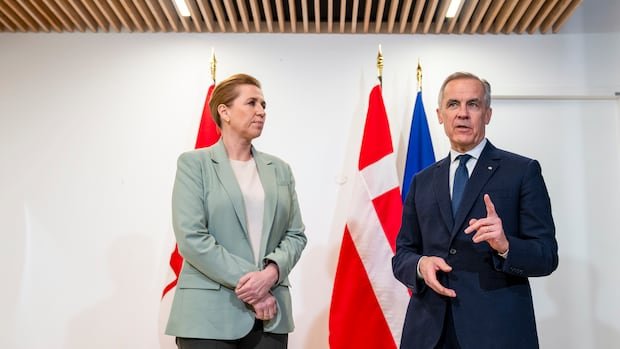

The motto for the coalition of nations gathering in Paris on Tuesday to discuss Ukraine seems to be “anticipate the unexpected.” This sentiment was evident as leaders, including Prime Minister Mark Carney, convened in the French capital. While European leaders were grappling with the implications of U.S. involvement in Venezuela on Ukraine’s ceasefire efforts, Carney was managing the fallout from Chrystia Freeland’s appointment as an unpaid economic adviser to President Volodymyr Zelenskyy while still serving as a member of Parliament.
The capture and intended prosecution of Venezuelan President Nicolás Maduro by U.S. authorities created unease among European leaders on the eve of discussions regarding specific security assurances for Ukraine. Additionally, U.S. President Donald Trump reiterated his interest in acquiring Greenland from Denmark, with one of his advisers not ruling out the potential use of military force.
Trump’s comments prompted a response from Danish Prime Minister Mette Frederiksen, who emphasized the importance of taking such statements seriously. Carney refrained from expressing concerns about U.S. military threats concerning Greenland, emphasizing Canada’s allegiance with Denmark and Greenland while stressing collaboration for mutual progress.
Several countries voiced unwavering support for Denmark’s sovereignty over Greenland, underscoring the significance of allowing the Kingdom of Denmark to determine Greenland’s future. Carney met with Frederiksen, announcing plans for Canadian officials to establish a consulate in Greenland. The scheduled opening had been delayed due to weather conditions.
Carney’s measured reaction to Maduro’s apprehension highlighted Canada’s stance against Maduro’s regime and support for the Venezuelan people’s right to self-determination. While some political figures indicated a pause in Venezuela’s democratic transition, invoking the Monroe Doctrine to justify U.S. actions, discussions around Venezuela were expected to be handled cautiously during the upcoming meetings to avoid antagonizing the U.S.
The coalition leaders aimed to finalize specific security commitments for Ukraine to dissuade Russia from exploiting any ceasefire. The focus was also on reconstruction efforts in the region. Amidst the evolving geopolitical landscape, the leaders sought to address the challenges while maintaining a forward-looking approach for stability and progress.