


At Matthew Senecal-Junkeer’s establishment, The Birds & Beets in Vancouver, the café transforms from serving sandwiches and coffee during the day to offering wine and small plates in the evening. Senecal-Junkeer has observed a shift in customer behavior regarding price sensitivity between day and night operations.
In the daytime, customers at the café carefully consider their choices, such as opting for oat milk over regular dairy or adding avocado to a sandwich, based on price. Senecal-Junkeer noted a trend towards more affordable menu items being preferred during café hours, with sales of lower-priced items surging while sales of pricier items experiencing a decline.
Conversely, in the evening at the wine bar, customers seem less concerned about the cost of high-ticket menu items, embracing the luxury experience without much hesitation. This change in consumer behavior reflects a broader economic trend, with lower-income households feeling the brunt of financial instability.
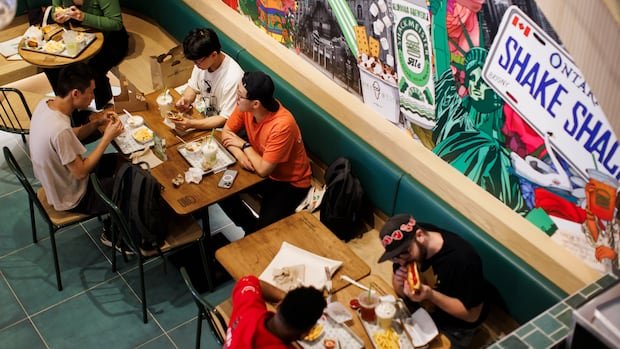
According to a report from Restaurants Canada, the restaurant industry is experiencing a “K-shaped economy,” where those with higher incomes can still afford dining out luxuriously, while those with lower incomes are cutting back on discretionary spending. This economic divide has a significant impact on various types of restaurants, with quick-service establishments facing more financial challenges compared to fine dining venues.
The report highlighted that full-service restaurants saw a 4.6% increase in sales in January compared to the previous year, while quick-service restaurants experienced a 2% decline. Fine dining establishments witnessed the most significant growth in traffic in 2025, indicating a preference for high-end dining experiences.
Despite the success of fine dining, the industry as a whole is facing challenges, with a significant percentage of restaurants reporting lower sales and profitability. Rising costs, particularly in fuel prices, are expected to continue impacting restaurants and consumer behavior. Quick-service restaurants, in particular, serve as a barometer for the broader restaurant sector’s financial health.
Food economist Mike von Massow noted that quick-service restaurants are facing increased competition, leading to a decline in customer visits. Lower-income individuals, who frequent quick-service establishments more often, are likely scaling back due to cost pressures. This shift in consumer behavior could have implications for job opportunities, especially for young individuals who often find employment in the fast-food sector.
While quick-service restaurants adapt to economic challenges by offering value meals, fine dining establishments like Chef Daniel Hadida’s Pearl Morissette are thriving. Hadida emphasized a growing trend where high-end dining is seen as a complete evening experience, attracting customers seeking a special and impressive dining experience.
In conclusion, the restaurant industry’s landscape is evolving, with varying impacts on different types of establishments. Navigating price sensitivity and economic uncertainties poses challenges for restaurant owners, requiring strategic decisions to balance profitability and customer satisfaction.