

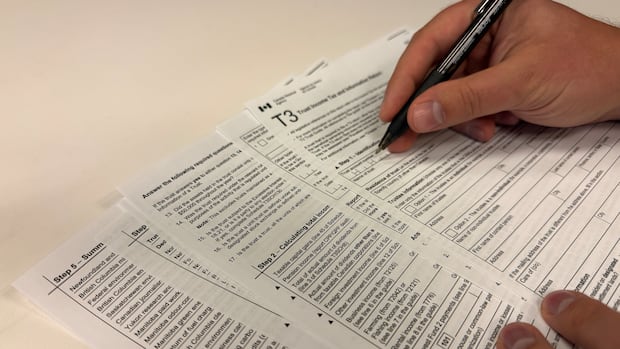

The Canada Revenue Agency (CRA) has indicated that it does not anticipate Canadians with simple trusts, known as bare trusts, to submit the necessary tax forms during the upcoming tax season. However, proposed legislative modifications currently under consideration in the House of Commons suggest that these requirements will likely take effect in 2027.
On Tuesday, the CRA revealed that it will once again delay the requirement for Canadians to file T3 tax forms for bare trusts this year. This announcement follows the agency’s initial decision to suspend these requirements amid the tumultuous 2024 tax filing period.
New tax reporting regulations for trusts were introduced by the government in 2022, intended to be effective for the 2023 tax year. Designed to combat issues such as money laundering, terrorist financing, and tax evasion, these rules inadvertently placed thousands of Canadians with simple bare trusts in a position where they needed to complete complex forms.
In March 2024, just days prior to the filing deadline, the CRA decided to halt the reporting obligations for bare trusts, attributing the decision to an “unintended impact on Canadians.”
A bare trust exists when an individual, referred to as the trustee, has legal ownership of an asset or property but does not possess beneficial ownership. According to the government’s definition, “the trustee can take no action without instructions from that beneficiary, and the trustee’s only function is to hold legal title to the property.”
-
Canadians may have needlessly filed bare trust tax forms as feds propose exemptions
-
Bare trust filing fiasco led to ‘wasted time and effort’: CRA watchdog
In contrast to more intricate trusts that are typically established by attorneys at their clients’ requests, bare trusts can occur almost inadvertently — for example, when a parent co-signs a mortgage with their child, thus becoming a partial owner, or when an elderly parent includes their children on a bank account to assist with bill payments.
This past summer, the Finance Department proposed clarifications to the rules that would exclude certain straightforward bare trust relationships.
Clear guidance needed, CPA org says
These new regulations were introduced as part of Bill C-15, the budget implementation act, which is expected to be reviewed by committee when MPs reconvene in Parliament next year.
The CRA announced on Tuesday that it will not enforce reporting obligations for bare trusts while C-15 is being discussed in the House, but noted that the modifications are anticipated to be effective for the 2026 tax year.
“Certain bare trusts will be required to file for taxation years ending on or after Dec. 31, 2026,” the CRA stated in a release.
According to the Finance Department, the proposed changes within the bill aim to exempt specific bare trusts. These exemptions include:
- Trusts with assets not exceeding $50,000 during the calendar year.
- True joint ownership situations, like a joint bank account held by spouses.
- A parent being added to the title of a child’s primary residence to enable the parent to co-sign the child’s mortgage.
- A scenario where spouses share a home but the title is solely in one spouse’s name.
Additionally, if an adult child is co-named on an elderly parent’s bank account, it may also qualify for exemption under the proposed changes, provided the account’s value is below $250,000.
Ryan Minor, a director with Chartered Professional Accountants of Canada, expressed optimism that the new regulations will give affected Canadians adequate time to prepare.
“That offers us a window of just over 12 months to get ready. So it’s an improvement. Will it be sufficient? I hope so,” Minor told CBC News.
The CRA’s watchdog criticized the agency for its sudden pause in 2024, stating that it resulted in “wasted time and effort.”
Despite the delay, over 44,000 taxpayers — many of whom hired tax professionals to assist them — still submitted bare trust forms in 2024.
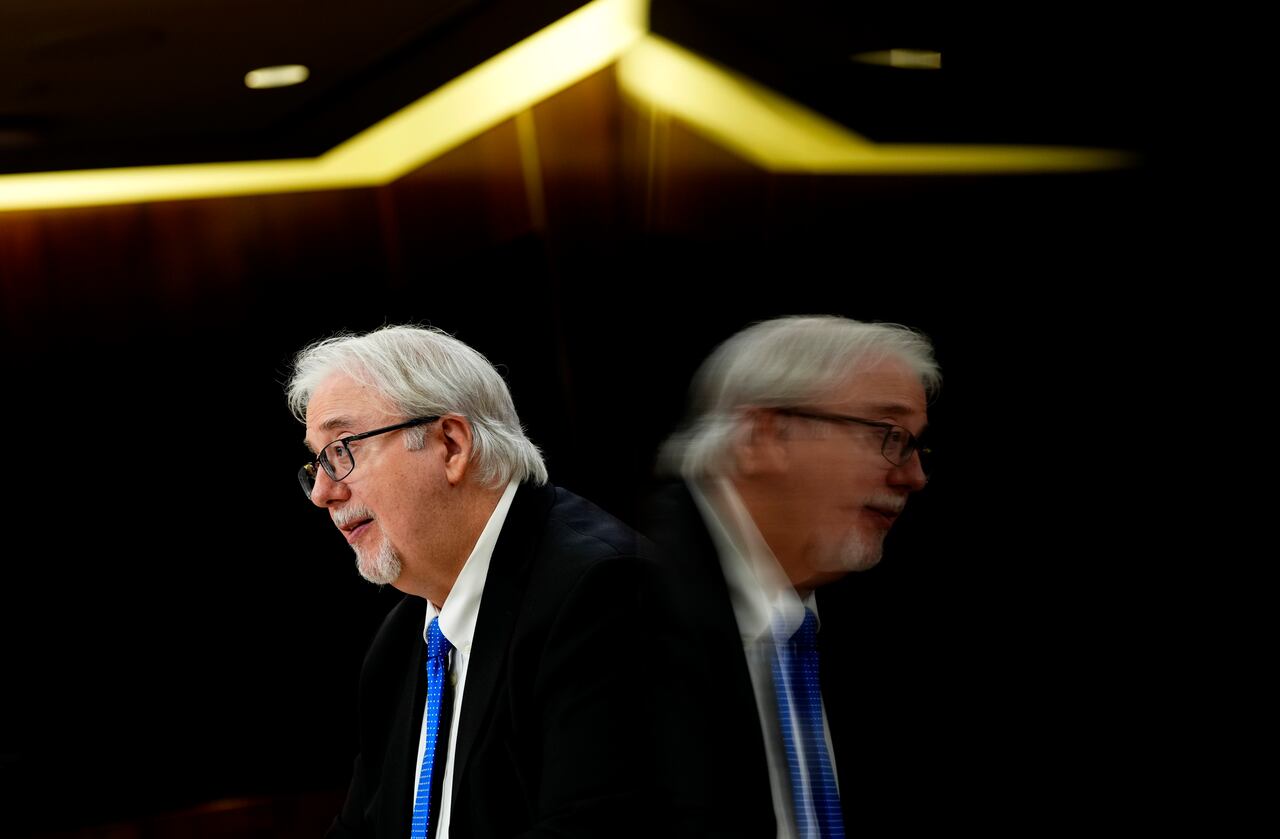
Canada’s Taxpayer’s Ombudsperson François Boileau released a report in March that raised a number of issues with how the Canada Revenue Agency handled the administration of bare trust reporting rules. (Justin Tang/The Canadian Press)
François Boileau, Canada’s Taxpayers’ Ombudsperson, found that the CRA failed to provide timely information, which hindered taxpayers and tax professionals from adequately preparing for the new filing requirements.
To prevent a recurrence of such issues with the upcoming updates, Minor emphasized that the tax agency must offer clear instructions regarding its expectations to ensure understanding among average Canadians.
“What we would like to see is clarification that explicitly states, ‘In these situations, you do not have to file,'” he stated.
“I’d like to see them provide comprehensive guidance on this matter.”
While Canadians submitting bare trust forms will not incur taxes on those trusts, they could face significant penalties for non-compliance.
Bill C-15 must still be approved by both houses of Parliament before it can become law.