
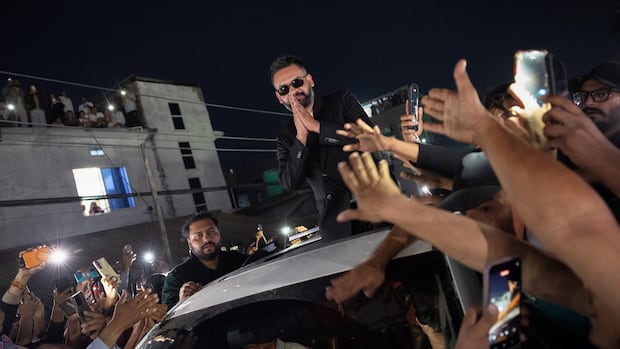

A political organization established only four years ago and headed by a former rapper has dominated Nepal’s parliamentary election, according to results released by the electoral commission on Thursday.
The election, which marks the first since last year’s youth-driven uprising, was claimed by the Rastriya Swatantra Party (RSP), led by rapper-turned-politician Balendra Shah.
-
Former rapper and Gen Z’s candidate poised to win Nepali election by landslide
-
Analysis
In Nepal, a former rapper wants to be the next prime minister — and young voters are excited
The RSP secured 125 directly elected seats along with an additional 57 through proportional representation, totaling 182 seats in the 275-member House of Representatives, which is the influential lower house of parliament. The Nepali Congress party finished in second place with 38 seats.
In Nepal, 165 members of the House of Representatives are elected directly by voters. The other 110 seats are filled using a proportional representation system, whereby political parties receive seats based on their share of the popular vote.
The electoral commission will request that political parties submit the names of individuals to occupy the seats acquired through the proportional representation system. Following this, they will inform the president, who will convene the new parliament, which is responsible for electing a new prime minister — requiring the backing of a majority of its members. The RSP currently holds almost two-thirds of the seats.
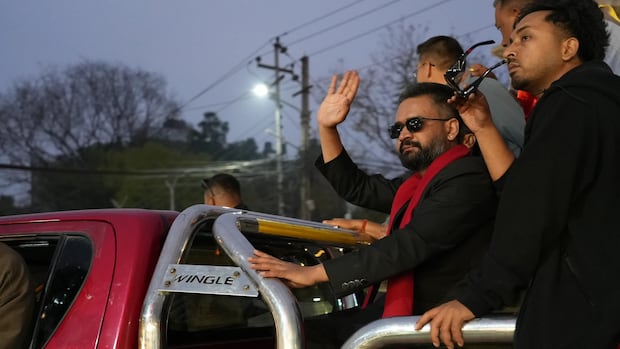
Six months after a Gen Z-led uprising helped bring down Nepal’s government, the country is holding an election that pits the old guard against a new generation. CBC’s South Asia correspondent Salimah Shivji breaks down what’s at stake and talks to voters about the change they want to see.
The entire process may take several days before a new government is in place.
Shah, who represents the RSP as its candidate for prime minister, previously won the Kathmandu mayoral election in 2022. He became a prominent figure during the 2025 uprising that led to the removal of former Prime Minister Khadga Prasad Oli.
Founded in 2022, the RSP garnered significant backing in the parliamentary elections, presenting a formidable challenge to the long-established Nepali Congress and the Communist Party of Nepal (Unified Marxist—Leninist).
The protests of the previous year, which addressed issues of corruption and ineffective governance, were sparked by a ban on social media and escalated into a widespread revolt against the government.
The unrest resulted in numerous fatalities and injuries, as demonstrators clashed with law enforcement and attacked government facilities.