

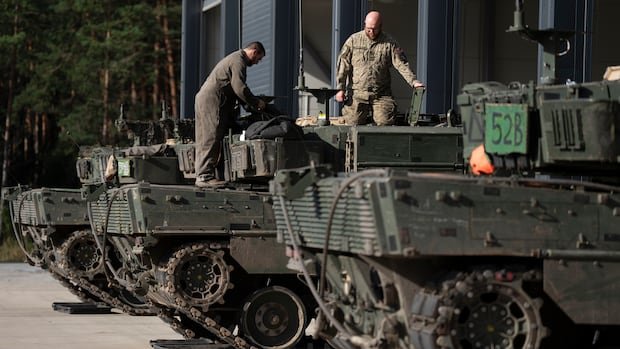

The Department of National Defence is currently addressing the challenges associated with preparing for a significant increase in the number of reservists as outlined in an ambitious mobilization plan. Canada’s top military official views this proposal as a dynamic project that is still evolving.
To support this initiative, a dedicated position has been established within the department to oversee the expansion of the military in case of a major crisis. Internal documents obtained by CBC News reveal that the mobilization process is expected to progress slowly due to existing limitations within the defence industry.
The newly appointed director general is tasked with the monumental goal of recruiting 100,000 reserve soldiers and an additional 300,000 citizen soldiers for a supplementary reserve, in addition to the current 85,500 full-time military personnel. The defense material branch emphasized in a July 2025 presentation that current resources are already strained, affecting the re-equipping of the regular force.
Chief of the Defence Staff Gen. Jennie Carignan stated that the department is in the early stages of developing options to present to the federal government. The focus is on determining the roles and missions of this strategic reserve, which would primarily be deployed within the country.
The mobilization office set up within the Defence Department is expected to manage the expansion of part-time military forces, with a team consisting of eight officers and six civilian employees. Addressing the logistical challenges, the briefing highlighted the constraints posed by global supply chain disruptions and the high costs involved in outfitting and equipping soldiers.
Notably, there are concerns about the practicality and strategic rationale behind the mobilization plan. Experts question the necessity of enlisting 300,000 individuals, especially with limited training and resources. The directive also raises apprehensions about the possibility of legislative activation for overseas duties, akin to conscription.
Despite these uncertainties, Carignan remains optimistic about the public response to the call for volunteers, citing an increase in Canadians expressing interest in contributing to national security amid global uncertainties. The extensive mobilization effort is seen as a significant societal shift that will require effective communication and collaboration with various stakeholders to garner support for the initiative.