

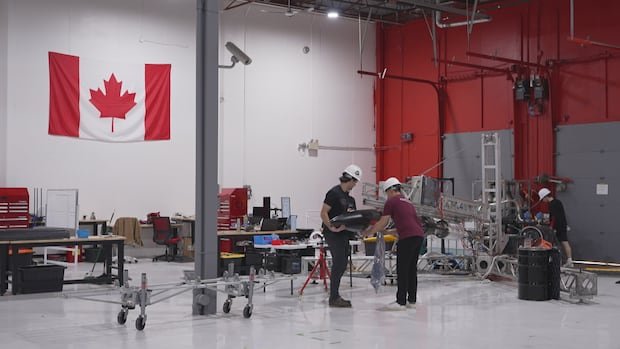

Canada, being the sole G7 nation lacking its own space launch capabilities, is keen on developing a Canadian-made rocket. Several Canadian companies are in a race to provide the country with its means to access space promptly. This effort comes amidst concerns from some SpaceX customers that the industry leader might reduce its orbital launch services.
The rocket companies are faced with the challenge of fulfilling a costly endeavor within tight deadlines and shifting government priorities. As Canada lacks the capability to launch rockets domestically, customers in the country rely on external entities, mainly American ones like SpaceX, which launched all 12 Canadian satellites in 2025.
The importance of these satellite technologies cannot be understated, as they are crucial for telecommunications, military applications such as threat detection, and earth observation like wildfire monitoring. There are fears that without control over its own launches, Canada risks being denied launch services for its technology by foreign entities.
To address this issue, the Canadian government has designated space as a key sovereign capability and introduced legislation to authorize launches from Canadian soil. Funding has been allocated to support three Canadian companies working on rockets, aiming to achieve light-lift rocket capabilities by 2028.
One of these companies, NordSpace, faced an unsuccessful suborbital rocket test launch in 2025 but plans to retry soon. Reaction Dynamics, another contender, has been developing a unique engine design since 2017. Canada Rocket Company, the newest entrant, aims to build a medium-lift rocket with private investments and government support, targeting a first launch by 2032.
As SpaceX transitions to its larger Starship vessel, concerns arise about the potential reduction in Falcon 9 rocket services, affecting customers who rely on them for satellite launches. This situation highlights the significance of establishing a Canadian rocket manufacturing capability. CEO Mina Mitry of Kepler anticipates that competitors like Rocket Lab could help fill the gap left by SpaceX.
The push for Canadian rocket development is seen as a long-term endeavor requiring substantial funding and time. Despite the challenges, optimism abounds within the industry, with companies working towards achieving independent launch capabilities to secure Canada’s access to space.