

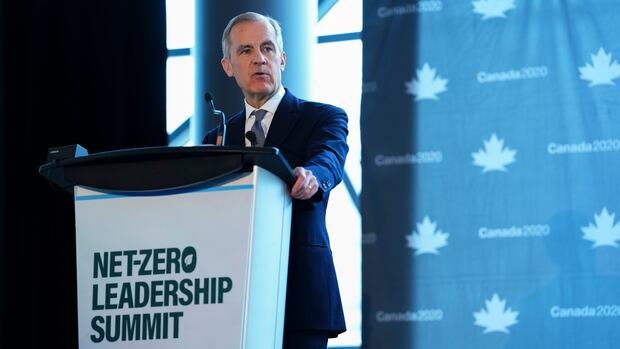

Ten months prior to his resignation from Mark Carney’s cabinet, Steven Guilbeault expressed support for the then Liberal leadership candidate. Guilbeault emphasized his longstanding relationship with Carney, highlighting their collaboration on environmental initiatives and climate change combat strategies. Carney, renowned for his climate advocacy, previously served as the UN’s special envoy for climate action and finance, underscoring his dedication to environmental causes.
However, Guilbeault’s departure revealed discrepancies between his climate policy expectations and Carney’s government actions. Guilbeault clarified that despite endorsing Carney, they differed in their approaches to addressing climate change.
Carney’s emphasis on market-driven solutions and reluctance towards stringent regulations contrasted with Guilbeault’s expectations. This divergence became evident in Carney’s focus on industrial carbon pricing. Carney’s commitment to climate action was further highlighted in his book, “Value(s),” where he underscored the significance of combating climate change for future generations.
The Carney government’s pursuit of industrial carbon-pricing systems faced challenges, including design flaws and political opposition. The memorandum with Alberta aimed to address these issues by strengthening policies and securing provincial support. However, concerns were raised about potential exemptions undermining national climate policies.
To mitigate risks, suggestions were made for an equivalency agreement with Alberta to ensure emissions reductions were effectively managed. Discussions on Canada’s climate policy agenda emphasized the importance of electrification and clean energy, aligning with the construction of new interties between provinces.
Despite uncertainties surrounding the ZEV mandate and other climate initiatives, Carney’s political maneuvering on climate policies reflected public priorities. Recent polling indicated a lower emphasis on climate change compared to other concerns like the cost of living. The evolving political landscape underscored the importance of maintaining public trust in climate initiatives.
Guilbeault’s resignation marked a shift in the Liberal Party’s climate caucus, potentially leading to increased advocacy for more robust climate action within the federal government.
In conclusion, while philosophical differences persist in climate policy approaches, Carney’s government faces the challenge of balancing environmental goals with economic considerations and public perceptions. The evolving climate agenda will require strategic decisions to navigate political dynamics and advance sustainable solutions.