

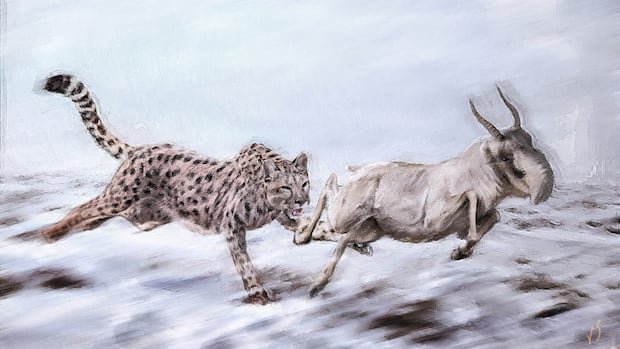

A recent discovery in northern Yukon has upended previous assumptions about ancient feline species. Initially identified as ice-age pumas or cougars, bones found in the Bluefish Caves and a local mine site were subjected to DNA analysis by researchers at the University of California. The surprising results revealed that these creatures were, in fact, American cheetahs, scientifically known as Yukon Miracinonyx.
This groundbreaking revelation was made possible by Molly Cassatt-Johnstone, a former lab technician, who conducted the analysis as one of her first assignments. The findings prompted paleontologist Grant Zazula to reconsider the region’s prehistoric fauna. The study, recently published in Current Biology, delves into the dietary habits and habitat range of these ice-age cheetahs.
Contrary to previous beliefs, the American cheetah was thought to have evolved as a specialized predator of pronghorn antelope in grassy plains. However, the discovery of these cheetahs in the Arctic tundra raised questions about their survival strategy in a different environment. Collaborating with researchers from Canada and the U.S., the team employed stable isotope analysis to unravel the mystery.
Remarkably, the study revealed that Yukon cheetahs primarily fed on fish, a behavior uncommon among both past and present-day felines. This dietary preference sheds light on the unique ecosystem of the region and underscores the adaptive strategies of these ancient predators. The researchers also found genetic evidence linking the Yukon Miracinonyx to North American pumas, hinting at a low population size and limited genetic diversity that may have contributed to their eventual extinction.
The presence of these fishing felines has led to a proposal to rename this distinct population as the ‘Yukon Cheetah.’ Grant Zazula emphasized the significance of every new bone discovery in unraveling the mysteries of the past, highlighting the ongoing evolution of paleontological knowledge.