

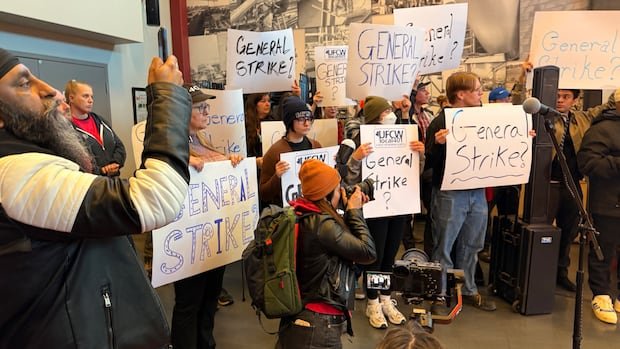

Albertans are currently discussing the possibility of a general strike for the first time in over a century, sparked by the provincial government’s use of the notwithstanding clause to end a teachers’ strike. The Alberta Federation of Labour (AFL), comprising 24 unions representing 175,000 workers, is rallying against the government’s actions. AFL’s president, Gil McGowan, who also heads the Common Front collective, has vowed to stand up for workers’ rights and is considering a potential general strike as a response to the government’s interference with bargaining rights.
The legality of a general strike in Alberta is under scrutiny. The AFL’s proposed general strike may not meet the criteria set by the Alberta Labour Relations Board for a legal strike. According to the Board, specific conditions must be met, including the expiration of collective agreements, engaging in collective bargaining, mediation with a government-appointed mediator, a cooling-off period after mediation, a supervised vote on strike action, and providing a 72-hour notice before commencing a strike.
James Muir, an associate professor of history and law at the University of Alberta, highlighted the distinctions between legal and illegal strikes, emphasizing the potential consequences faced by workers in the event of an illegal strike. He noted that while illegal strikes may serve as a unifying force for workers, they come with significant risks, such as fines, job terminations, and legal penalties.
Reflecting on Canada’s history with general strikes, the infamous Winnipeg General Strike of 1919 stands out. Despite not achieving immediate success in terms of demands, the strike led to political shifts and the establishment of Canada’s first minimum wage. The ripple effects of the strike were felt in other cities, including Edmonton and Calgary, where sympathy strikes occurred, further highlighting the impact of collective labor actions.
The AFL is contemplating the strategic implications of a potential general strike in Alberta, aiming to harness the collective power of workers to address ongoing labor disputes with the provincial government. McGowan emphasized the importance of solidarity among workers and the potential influence of a unified front against government actions.
While the threat of a general strike can wield significant influence, the effectiveness of such actions in the face of government interventions remains a subject of debate. The use of legislative powers by governments to curb strike actions, as seen in Ontario, presents challenges for labor movements. However, the political repercussions of such interventions could manifest in future elections, shaping public sentiment and government policies.
Both McGowan and Muir stress the importance of strategic planning and unity among unions before embarking on a general strike in Alberta. While the decision to pursue a general strike is complex, the current environment of discontent and grievances may provide a window of opportunity for collective action.