

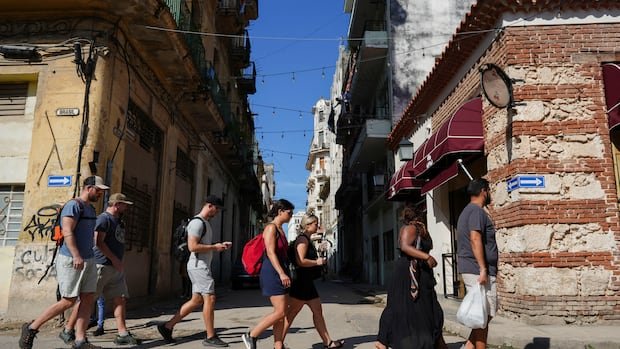

Cuba’s tourism industry, once considered the country’s economic powerhouse, has faced a significant downturn since its peak in 2018. The United States government’s restrictions on Cuba’s oil supply have exacerbated the industry’s decline, leading to the suspension of flights by Canadian, Russian, and European airlines, as well as the closure of resorts. In 2024, Cuba saw a drastic drop in international visitors, welcoming only 2.2 million tourists compared to 4.7 million in 2018.
Experts warn that Cuba is now in the midst of its most severe economic crisis since the aftermath of the 1962 Missile Crisis. The collapse of the tourism sector could have devastating effects on the country’s economy, with some predicting it could be the economy’s downfall.
The history of Cuba’s tourism industry dates back to the pre-revolution era when it was predominantly controlled by the American mafia. Following the Cuban Revolution in 1959, the sector was neglected due to its associations with corruption and exploitation. However, in the 1980s, Cuba began to prioritize tourism as a key economic driver, attracting visitors from countries like Canada, Russia, Spain, and Germany.
Under Fidel Castro’s regime, the tourism industry became centralized under GAESA, a military-run conglomerate responsible for a significant portion of Cuba’s GDP. The sector experienced a boom after former U.S. President Barack Obama normalized relations with Cuba in 2015, leading to a surge in American visitors and substantial economic gains.
However, subsequent restrictions on travel to Cuba by the Trump administration and external factors like the COVID-19 pandemic and the war in Ukraine have severely impacted Cuba’s tourism industry. The country’s reliance on tourism revenue for essential imports and investments has left it vulnerable to economic instability.
The Cuban economy has shrunk by 15% since the peak of the tourism sector in 2018, causing frustration among the populace over the government’s handling of the industry. Despite efforts to revitalize tourism post-COVID, the sector’s decline has exposed deep-rooted economic issues, exacerbating inequality and hardships for many Cubans.
As the country grapples with a dwindling tourism industry and a struggling economy, the future remains uncertain. The loss of tourism revenue has not only affected the sector itself but has also had ripple effects on other critical industries, pushing Cuba to a critical juncture with uncertain outcomes.