

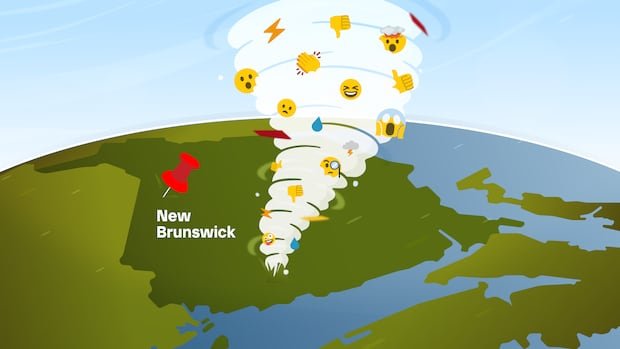

On July 14, Environment Canada issued a severe thunderstorm watch for New Brunswick, indicating favorable atmospheric conditions for thunderstorm development. The watch also mentioned a potential tornado risk.
Despite no severe thunderstorms or tornadoes occurring, social media saw a surge of misinformation, unreliable images, and widespread panic. Sander van der Linden, a psychology professor at the University of Cambridge specializing in misinformation, highlighted that extreme weather events, natural disasters, and health emergencies are breeding grounds for misinformation due to real-time urgency and uncertainty.
It’s crucial to differentiate between an Environment Canada “watch” and a “warning.” A watch advises preparedness for potential severe weather, while a warning indicates immediate action as severe weather is imminent or ongoing. Jill Maepea, an Environment Canada meteorologist from Fredericton, mentioned that the tornado risk during the severe thunderstorm watch was minimal.
Prior to the watch being issued, social media was already abuzz with speculations about a potential severe thunderstorm, with some Facebook pages warning about the event days before. Maepea explained that predicting convective weather can be challenging as it can develop rapidly and is different from tracking large winter storms, emphasizing the unpredictable nature of such storms.
Although official communication from Environment Canada was ongoing, misinterpretations of the information led to confusion among the public. The aftermath of the event saw continued social media uproar, with some individuals expressing disappointment at the lack of a storm and others sharing fake images of purported storm occurrences.
The rise of hyperrealistic AI technology has further blurred the lines between real and fake content online, making it challenging for individuals to discern truth from misinformation. Aaloak Jaswal, head of innovation at the University of New Brunswick’s Data Science and AI Research Institute, noted that AI has significantly lowered the barrier for creating convincing fake content, raising concerns about the impact of misinformation on public safety.
In a world where misinformation spreads rapidly, it’s essential for individuals to verify sources and ensure the authenticity of information, especially during emergencies. Jaswal emphasized the importance of maintaining trust in official sources during crises to prevent the spread of false information and promote public safety.
With the prevalence of misinformation, proactive efforts such as “pre-bunking” are vital to warn others about potential misinformation and encourage reliance on official sources for accurate information. This community-driven approach aims to establish a healthy information environment and ensure collective safety during emergencies.