

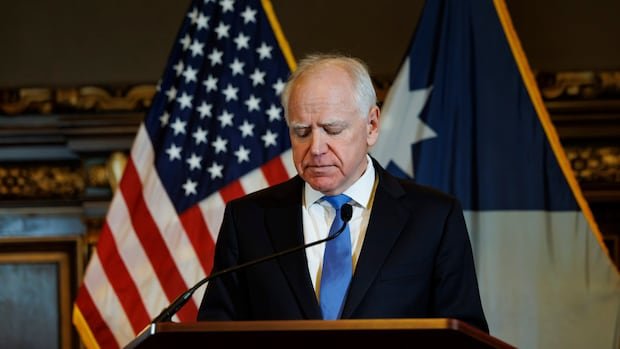

Minnesota Governor Tim Walz has decided not to pursue a third term in office, stepping back from his re-election campaign just months after its launch. Having been part of the Democratic U.S. presidential ticket alongside Kamala Harris, Walz stated on Monday that he lacked the required energy to secure another term, despite believing in his potential victory. He highlighted the challenges posed by ongoing fraud investigations while acknowledging the achievements during his seven-year tenure.
Accusations of fraud in child-care programs in Minnesota have been a focal point for U.S. President Donald Trump and other Republicans, leading to the freezing of child-care funds for the state. Walz criticized Trump’s administration for its actions, accusing them of attempting to sow discord and diminish the quality of life in Minnesota.
The contentious relationship between Trump and Walz persisted beyond the 2024 campaign, notably when Trump refrained from offering condolences to Walz following the tragic deaths of Democratic state House Speaker Melissa Hortman and her husband. Trump’s social media posts and accusations against Walz further strained their already tense interactions.
Harris, who selected Walz as her running mate based on his advocacy for working families and diverse experiences, praised Walz’s commitment to serving Minnesota’s best interests. Walz’s political journey, from a high school teacher and football coach to a U.S. national guard member and congressman, has been marked by both accolades and criticisms.
Throughout his governorship, Walz navigated a politically divided landscape, working to find common ground with opposing parties. His administration made significant strides in progressive policies, including the elimination of abortion restrictions, support for transgender rights, and the legalization of recreational marijuana. However, challenges like the pandemic-related food fraud scheme have marred his tenure.
The upcoming gubernatorial race in Minnesota will see a diverse pool of candidates vying for the Democratic nomination, with Republicans also gearing up for a competitive primary. As the political landscape evolves, Walz’s decision not to seek re-election sets the stage for a dynamic election cycle in 2026.