

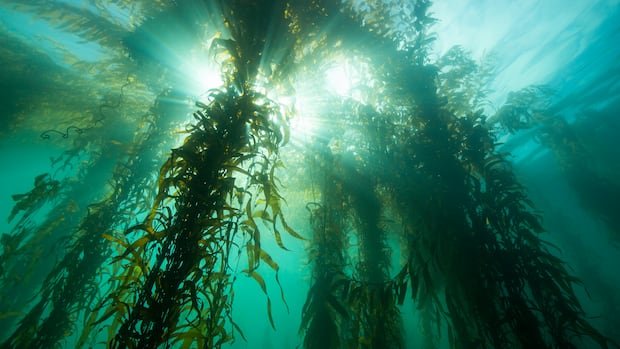

A vibrant kelp forest thrives near the breakwater on Dallas Road in Victoria, where the cold water supports its growth. However, various regions in British Columbia are experiencing localized warming, leading to the disappearance of once abundant kelp forests. A study conducted by Brian Timmer, a PhD student at the University of Victoria, revealed the historical decline of kelp and associated macroalgae communities in the northern Salish Sea. Comparing data from 1972 to present-day imagery, the study highlighted a significant loss of bull kelp cover in the Comox and Denman Island area. The study also indicated a substantial warming trend in waters near Comox and Denman Island, impacting kelp populations. Sea surface temperatures at the Chrome Island lighthouse have risen by 1.66°C over the past 50 years, affecting kelp growth.
Kelp, deemed a foundation species and primary producer, plays a crucial role in marine ecosystems by providing habitats and food for various sea creatures. The decline in kelp populations, including sugar kelp and red bladed algae, is attributed to warming waters along the British Columbia coast. William Cheung, a professor at the University of British Columbia, emphasized the importance of establishing accurate baselines to understand and address ecological changes effectively. The study also pointed out the necessity of conservation efforts and climate adaptation strategies to protect kelp ecosystems. Timmer, in collaboration with the Kelp Rescue Initiative and First Nations, aims to restore kelp forests by identifying suitable habitats and replanting kelp species. The ongoing research sheds light on the critical need to safeguard these marine ecosystems for future generations.