

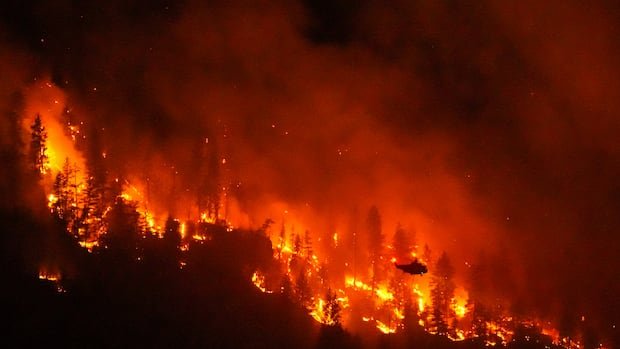

A recent study has shed light on the exacerbation of greenhouse gas emissions into the atmosphere due to wildfires, permafrost thaw, and other environmental changes, intensifying climate change beyond current global estimates. These climate feedback loops, where carbon emissions are triggered by climate change leading to further climate impact, could escalate warming by 20 to 30 percent in this century, as per researchers from U.S. institutions including Stanford University, the Environmental Defense Fund, and Spark Climate Solutions.
The study emphasizes the necessity of factoring in these additional feedbacks to align policy targets with the Earth’s response to climate change. It was published in the journal Environmental Research Letters, offering a comprehensive analysis of warming-induced emissions and their influence on global temperature rise. Most existing climate models primarily monitor emissions from human activities like fossil fuel combustion, food production, and waste decomposition.
The implications are particularly significant for Canada, a major contributor to warming-induced emissions. The country is already experiencing accelerated warming compared to the global average, as highlighted in the recent Canada’s Changing Climate assessment predicting up to five degrees of warming by the end of the century. The study underscores that changes in Canada will have global repercussions, emphasizing the impact of extreme weather events like wildfires.
The thawing of permafrost in the Arctic, accelerated by rising temperatures, has become a focal point. The study differentiates between gradual permafrost thaw and abrupt thawing triggered by warming and extreme events. This abrupt thawing, occurring locally near wetlands and lakes, releases substantial carbon into the atmosphere, intensifying climate change.
Moreover, wetlands, a significant source of warming-induced emissions in Canada, are a growing concern due to heightened methane emissions. Scientists are alarmed by the surge in atmospheric methane levels since 2020, partly attributed to wetland emissions. The study calls for the inclusion of freshwater wetlands in climate models to better understand and address this methane puzzle.
In conclusion, the study underscores the urgent need for enhanced monitoring and research to quantify and mitigate the impact of these feedback loops on climate change. It emphasizes the interconnectedness of environmental changes globally and the responsibility to address these challenges proactively.