

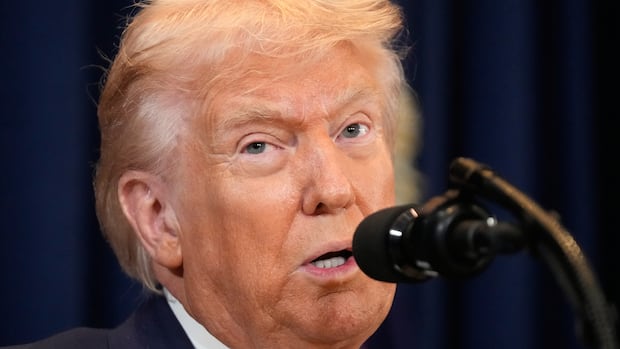

U.S. President Donald Trump and Secretary of War Pete Hegseth have provided various and often conflicting accounts regarding the duration of the military engagement with Iran.
While there are legitimate strategic reasons for refraining from revealing a specific end date to the adversary, both Trump and Hegseth have readily shared timelines for the combat operations.
Nevertheless, these timelines have varied significantly.
Since the commencement of bombing on February 28, here are some statements made by the U.S. President and his Secretary of War about the expected length of the conflict:
- Day 1: Trump stated on Truth Social that the bombing would persist “throughout the week or as long as necessary to reach our goal of PEACE THROUGHOUT THE MIDDLE EAST AND, INDEED, THE WORLD!”
- Day 2: In a video update, Trump asserted that the military action would continue “until all of our objectives are achieved.”
- Day 3: Trump remarked at a military Medal of Honor ceremony, “We projected four to five weeks from the outset, but we are equipped to extend beyond that,”
- Day 5: Hegseth informed Pentagon correspondents: “You can say four weeks, but it could be six, or eight, or even three. Ultimately, we control the pace and tempo.”
- Day 7: Trump declared on social media, “There will be no deal with Iran except UNCONDITIONAL SURRENDER!”
- Day 9: Hegseth stated to CBS’s 60 Minutes, “We’re ready to go as far as necessary to achieve success.”
- Day 10: When a reporter inquired if the war would conclude this week, Trump responded, “No, but soon. I believe so. Very soon.”
On Tuesday, the 11th day of the collaborative U.S.-Israel military action against Iran, both Hegseth and White House press secretary Karoline Leavitt made remarks that seemed intended to clarify the discrepancies.
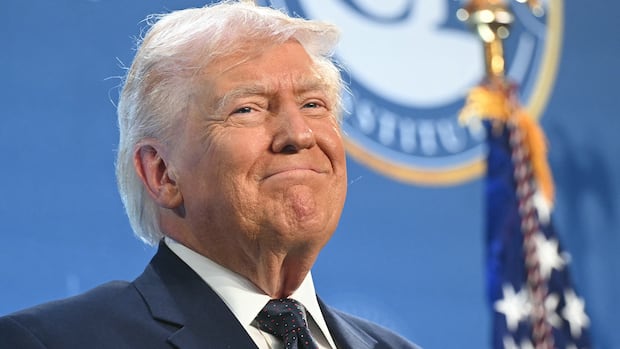
U.S. President Donald Trump gave conflicting messages about where the war with Iran stands, saying the objectives were complete but the conflict would continue.
Both Hegseth and Leavitt indicated that Trump has established the objectives for the conflict and will determine its conclusion.
“Ultimately, the president will define the end state of those objectives,” Hegseth stated at a Pentagon press briefing on Tuesday morning.
Trump ‘controls the throttle’
“He controls the throttle; he’s the one deciding … when we are meeting those specific objectives,” Hegseth elaborated. “So it’s not up to me to suggest whether we are at the start, the middle, or the end.”
Later in a press conference at the White House, Leavitt echoed a similar sentiment.
“Ultimately, the military operations will cease when the commander-in-chief decides that the military objectives have been fully realized, and that Iran is in a state of complete and unconditional surrender, irrespective of their statements,” Leavitt remarked.
As of now, there are no indications of an imminent capitulation from the Iranian government. Analysts suggest that naming Ayatollah Mojtaba Khamenei as the country’s supreme leader indicates Tehran’s commitment to a hardline stance.
A statement from the speaker of Iran’s parliament also conveyed defiance.
“We are certainly not pursuing a ceasefire,” Mohammad Bagher Ghalibaf stated on Monday in a post on X. “We believe the aggressor should be punished and taught a lesson that will prevent them from attacking Iran again.”
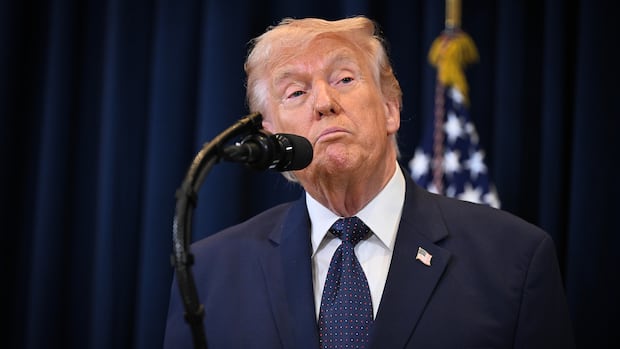
U.S. President Donald Trump stated that Iran must ‘unconditionally surrender’ for the U.S.-Israel war on Iran to conclude. On Tuesday, White House press secretary Karoline Leavitt reiterated this position, confirming that the war will cease when Trump chooses to end it. Thomas Juneau, a professor at the University of Ottawa, believes that domestic political pressures on the Trump administration are more likely to dictate the war’s conclusion than an Iranian surrender.
Thomas Juneau, an associate professor of public and international affairs at the University of Ottawa, asserts that the only consistent aspect of the messaging from Trump’s administration regarding the war’s endpoint has been its inconsistency.
“The only coherent explanation I can find is that President Trump is engaging in his usual practice of deliberately avoiding a clear objective,” Juneau expressed in an interview with CBC News Network on Tuesday afternoon.
U.S. domestic politics could dictate war’s conclusion
Juneau observes that Trump is “waiting to assess the aftermath” of the military operation.
“Whenever he determines that the situation is favorable for him to gain a political advantage, he will declare an end to the strikes. This could happen later this week, next week, or even next month,” he explained.
It is more probable that Trump’s decision to conclude the war will stem from domestic political pressure—such as concerns over rising oil prices or declining stock markets—rather than from achieving a particular objective in Iran, according to Juneau.
In recent days, Trump and his administration have displayed slightly more consistency in outlining their military aims: to dismantle Iran’s missile production, navy, nuclear weapon development capabilities, and support for militant groups like Hezbollah and Hamas.
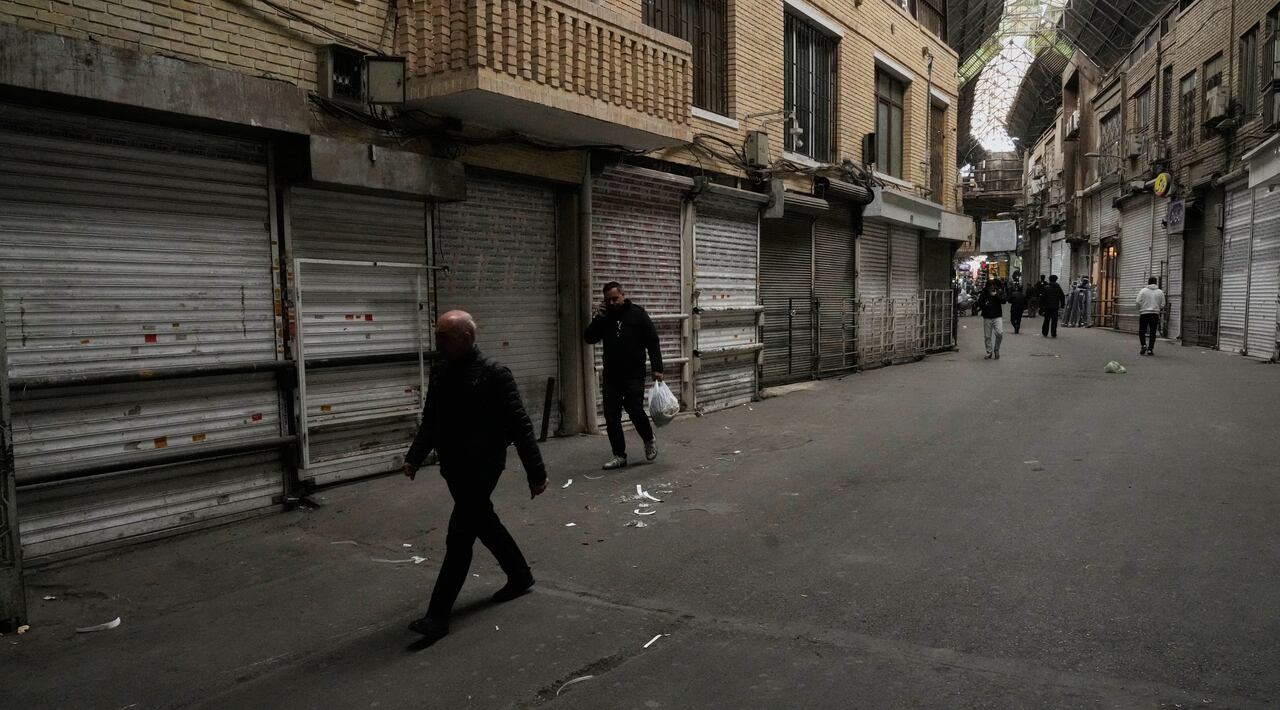
Individuals walk by shuttered shops in a nearly vacant bazaar in Tehran on Tuesday. The appointment of Ayatollah Mojtaba Khamenei as the nation’s supreme leader indicates that Iran is maintaining a hardline stance, analysts suggest. (Vahid Salemi/The Associated Press)
However, the administration continues to send mixed messages regarding its political objectives for the conflict. Specifically, it remains uncertain whether the removal of the Islamic regime is among its goals.
Colin H. Kahl, who previously served as undersecretary of defense in the Biden administration and currently heads the Freeman Spogli Institute for International Studies at Stanford University, stresses the importance of a clearly defined purpose for the war.
-
Follow CBC’s live coverage of war in Iran
-
Analysis
Why Trump can’t afford to brush off the Iran war’s economic impact
“The history of U.S. military interventions teaches a consistent lesson: conflicts initiated without clear political objectives seldom conclude favorably,” Kahl noted in a piece for Foreign Affairs on Tuesday.
Kahl points out that there is no logical endpoint for a conflict if its political aims remain undefined or disputed.
“Achieving regime change, altering behavior, terminating Iran’s nuclear program, and diminishing Iran’s capacity to project power do not represent variations of the same aim,” Kahl elaborated.
He emphasizes that these differing objectives “necessitate fundamentally different military strategies,” involving distinct timelines, definitions of success, and post-conflict planning.