

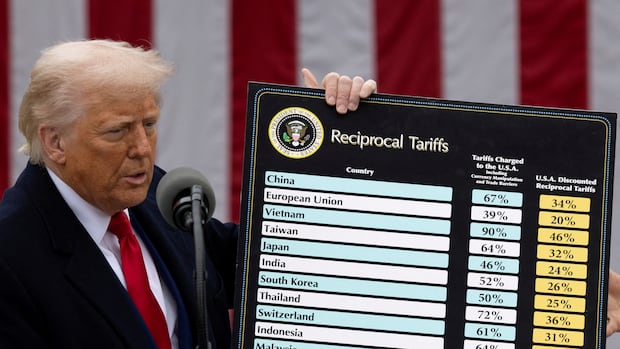

On Wednesday, the administration of U.S. President Donald Trump initiated a trade inquiry concerning excess industrial capacity among 16 key trading nations, aiming to reestablish tariff leverage after the U.S. Supreme Court dismantled a cornerstone of Trump’s trade strategy last month.
Canada is excluded from the list of targets in this new investigation.
U.S. Trade Representative Jamieson Greer stated that the Section 301 investigation into unfair trade practices may result in new tariffs on China, the European Union, India, Japan, Mexico, and South Korea by the summer.
Other nations included in the excess capacity investigation consist of Taiwan, Vietnam, Thailand, Malaysia, Cambodia, Singapore, Indonesia, Bangladesh, Switzerland, and Norway.
Trump and his administration have expressed their intention to recover the hundreds of billions of dollars lost following the Supreme Court’s ruling in February, which found that the president’s use of emergency powers to impose tariffs was invalid, by employing alternative legal frameworks to implement new taxes.
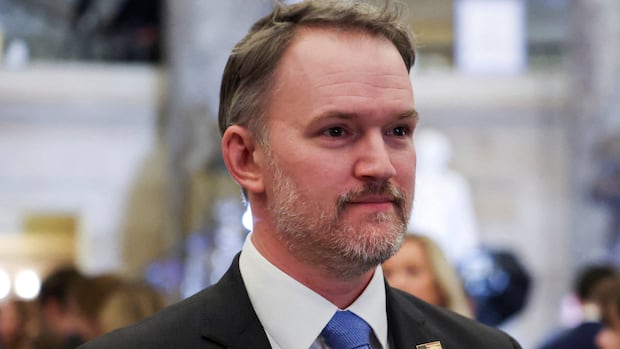
U.S. trade envoy Jamieson Greer states that Canada must accept higher tariffs as part of any trade agreement with the Trump administration, which may include a potential renewal of the Canada-U.S.-Mexico Agreement (CUSMA).
In this instance, the administration is launching inquiries under Section 301 of the Trade Act of 1974, which could eventually result in the introduction of new import taxes.
However, during a call with the press on Wednesday, Greer expressed that he did not wish to speculate on the outcome of the investigation.
“The policy remains unchanged — the methods may vary based on, you know, the unpredictability of courts and other factors,” Greer noted, emphasizing that the objective was to safeguard American employment.
Resurgence of tariff tensions
The initiation of this process to substitute Trump’s previous tariffs could reignite the tensions that unsettled the global economy last year.
The tariffs that have since been overturned prompted new frameworks with U.S. trading partners — and the effects of a new series of import taxes on those agreements remain uncertain.
-
Video
Trump issues new 10% global tariff after ‘Liberation Day’ tariffs struck down
-
Companies line up for refunds after U.S. Supreme Court strikes down Trump’s tariffs
Greer indicated that the new investigations, which have been anticipated by administration officials, should not surprise trading partners, and they should adhere to their agreements, although he refrained from stating that compliance would exempt them from all new Section 301 tariffs.
He remarked that Trump was committed to pursuing tariffs and “will discover a method to address unfair trading practices. He will find a way to reduce our trade deficit. He will find a way to protect U.S. manufacturing. We possess a variety of tools to achieve this,” Greer stated.

Following the U.S. Supreme Court’s ruling that President Donald Trump’s IEEPA tariffs were illegal last week, tens of billions of dollars in refunds became a possibility. However, the ruling does not provide a clear process for obtaining those refunds, which are yet to be confirmed by the White House. Flexport, an AI-driven logistics firm, introduced a tariff refund calculator to help estimate potential refunds for companies. CEO Ryan Petersen discusses why his company developed this tool on Power & Politics.
Scope of forthcoming investigations
The government is investigating persistent trade surpluses and practices such as subsidies and wage suppression, among other considerations.
Additionally, the administration is launching a Section 301 investigation aimed at prohibiting the import of products produced through forced labor.
Greer suggested that more Section 301 investigations could emerge regarding issues like digital service taxes, drug pricing, and ocean pollution, among other areas. The U.S. Commerce Department has separate investigations under Section 232 of the Trade Expansion Act of 1962.
There are deadlines looming to finalize these investigations.
The administration has enacted 10 percent tariffs on imported goods under Section 122 of the Trade Act of 1974, but these are set to expire on July 24. Trump has indicated plans to increase this import tax to 15 percent, though he has not yet taken action.
EU and Asian nations refer to agreements made with the U.S.
On Thursday, Bernd Lange, the chair of the European Parliament’s trade committee, remarked that the initiation of new Section 301 investigations into unfair trading practices was anticipated, but “any significant deviation from the Turnberry Deal will not be acceptable.”
The European Parliament is still considering when to vote on the proposed trade agreement established last summer between the U.S. and the EU in Turnberry, Scotland.
China asserted on Thursday that the U.S. allegation of overcapacity was a “false proposition” and expressed opposition to “political manipulation under this pretext.” Guo Jiakun, a spokesperson for the Foreign Ministry, stated that Beijing is against all forms of unilateral tariff actions.
Taiwan’s cabinet released a statement asserting that the reciprocal trade agreement signed with the U.S. last month addressed various issues that may be included in the Section 301 investigation. Similarly, Indonesia noted that its agreement with the U.S. continues to serve as the primary guideline for bilateral trade relations.