

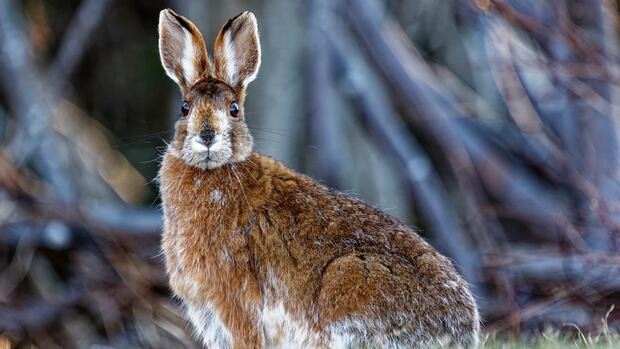

Snowshoe hares have become more prevalent across Prince Edward Island following post-tropical storm Fiona, according to a wildlife biologist in the province. Garry Gregory from P.E.I.’s fish and wildlife division has noticed an increase in sightings of “rabbits” by Islanders, with most likely being snowshoe hares rather than actual rabbits, which are not native to the area.
While there is no official data tracking the snowshoe hare population growth, Gregory believes that changes in the landscape post-Fiona have likely contributed to their increased numbers. The storm left behind dense debris in forests, providing ideal escape cover for hares. As a result, more hares are surviving, potentially leading to a rise in population.
The storm also brought about new growth opportunities for hares, as the canopy openings allowed for the flourishing of plants like willows, grey birch, and maples, which are essential winter food sources for the hares. This new habitat benefits not only hares but also other wildlife like songbirds and woodcock.
Despite the rise in hare sightings, Gregory reassures Islanders that there is usually no need for concern, except for some garden nibbling. Feeding the hares is discouraged, as they have abundant food sources in the wild and may become wary of human-provided food. Additionally, feeding hares could attract them closer to potential predators like dogs.
Furthermore, reports of hares with ticks have increased, likely due to heightened awareness and the ease of capturing photos on smartphones. Gregory mentions that ticks commonly found on hares are not the Lyme disease-carrying species. While it is normal for hares to have ticks, severe infestations may pose health risks, but typically, it does not have a significant impact on the animals.