

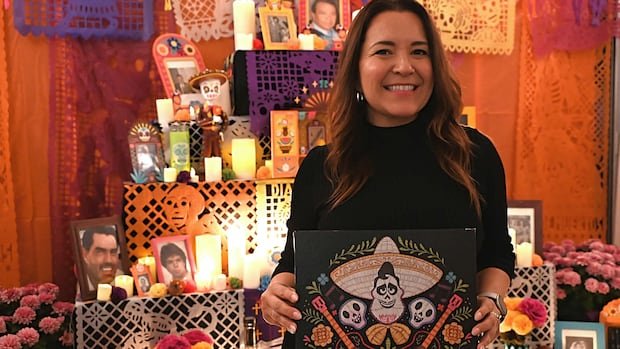

This year, Karla Frey faced challenges while completing her traditional offering in her residence in Boucherville, Quebec. The tragic loss of her five-year-old neighbor and his mother in a recent car accident weighed heavily on her mind. Despite the emotional burden, Frey persevered and completed the altar, which she has been setting up annually for the past 15 years to honor departed loved ones. She adorned the altar with picture frames, candles, a decorative bread called “pan de muerto,” papel picado, mezcal, tequila, and cempasuchil (Mexican marigolds).
Reflecting on the joy the young boy found in her offering, Frey dedicated a part of this year’s altar to him and his mother, expressing her emotions through the symbolic setup. The Day of the Dead, known as “El Dia de Muertos,” is a cultural celebration deeply rooted in Mexican traditions, observed from late October to early November to commemorate and celebrate deceased family members, friends, and pets.
In Quebec, the Mexican community upholds these ancestral practices, bridging connections between their adopted home and their native land. For Frey, who had not previously observed Dia de Muertos in Mexico City, this holiday serves as a means of reconnecting with her departed loved ones and linking Quebec to her cultural heritage.
Frey hosts gatherings at her home each year, where friends come together to share memories of their loved ones. She includes mezcal, water, and tequila on her altar to quench the thirst of visiting spirits, believing that the scent of copal incense and photographs guide them to the proper tribute. She emphasizes the significance of remembering the departed, as neglecting them causes them to perish again, this time from sadness.
Through the years, creating the ofrendas has aided Frey in coming to terms with her father’s passing, providing her with an avenue for emotional expression and acceptance. Similarly, Gerardo Familiar Ferrer’s perception of the Day of the Dead was transformed after participating in the festivities with Indigenous friends in Oaxaca, Mexico.
In Gatineau, Quebec, Familiar Ferrer’s altar features a small box inscribed with the names of departed loved ones, including his maternal grandmother. His profound understanding of these traditions enables him to share the essence of Dia de Muertos with others. Displaying resilience and cultural pride, Mexican Quebecers organize events and exhibitions, such as the immersive tour at UNAM-Canada, to introduce wider audiences to the rich traditions of the Day of the Dead.
Rafael Benitez, a Montreal resident and co-founder of PAAL Partageons le monde, emphasizes the festival’s role in facilitating intercultural exchanges and providing a platform for individuals to process grief. He recounts personal experiences of loss and how the event has aided him in coping with these losses. While the festival initially served as a private affair, it has evolved into a space for cultural dialogue and remembrance.
Benitez underscores the importance of honoring Indigenous peoples and their enduring efforts to preserve ancestral customs, with representatives from various Indigenous groups participating in the festival. Participants of the Day of the Dead celebration convey a message of remembrance and reflection, emphasizing that the occasion is not meant to evoke fear but rather to celebrate the lives and memories of departed loved ones joyfully and respectfully. Karla Frey, embodying this sentiment, views her meticulous ofrenda curation as a way to showcase her love to her daughters and to affirm her zest for life and acceptance of mortality.