

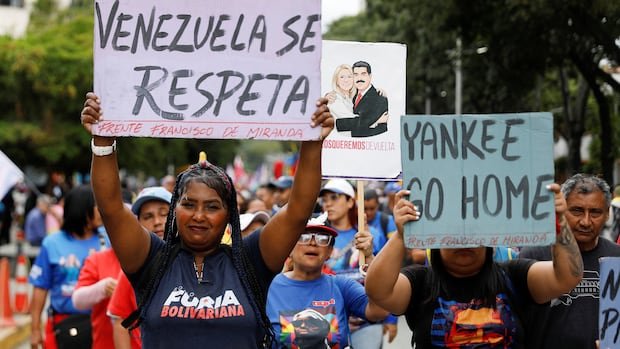

U.S. Senate Republicans have thwarted a proposal on Wednesday that aimed to prevent U.S. President Donald Trump from engaging in further military actions in Venezuela without Congress’s approval. This occurred after Trump pressured party members who had initially supported the resolution.
The vote resulted in a 51-50 outcome for a Republican motion to dismiss the war powers resolution, with only three of Trump’s fellow Republicans siding with all Democrats to support moving forward. Vice-President JD Vance intervened to break the tie.
Opponents contended that the resolution should not proceed due to the absence of U.S. troops in Venezuela at present, following the entry of U.S. forces into Caracas on Jan. 3 and the apprehension of Venezuelan President Nicolás Maduro.
Republican Senate Majority Leader John Thune of South Dakota stated, “We’re not currently conducting military operations there,” at the Senate’s opening on Wednesday, accusing Democrats of advancing the bill due to their relentless opposition to Trump.
While the Trump administration argued that Maduro’s detention was a legal move for his prosecution on drug charges, proponents of the war powers resolution disagreed. They highlighted a significant U.S. naval presence blockading Venezuela and engaging in confrontations in the Caribbean and Pacific regions.
Democratic Senator Tim Kaine of Virginia, a key sponsor of the resolution, criticized the argument that the situation in Venezuela did not constitute imminent hostilities as a misinterpretation of the war powers resolution.
The close voting results underscored congressional unease, including among some Republicans, regarding Trump’s foreign policy decisions and a growing sentiment that Congress, not the president, should hold the authority to deploy U.S. troops into combat, as outlined in the Constitution.
Days before the operation to oust Maduro, lawyers from the Trump administration endorsed the action, asserting its alignment with national interests and legal standards, as detailed in a recently disclosed legal opinion from the Justice Department.
On the political front, Trump’s influence over his party was evident in Wednesday’s vote, following a prior rebuke from five Republicans who supported the resolution. Trump vehemently criticized these senators and exerted pressure on them to switch their stance, resulting in two senators changing their votes on the resolution.
Despite the Senate’s decision, the resolution would have faced further hurdles to enactment, requiring approval from the Republican-dominated House of Representatives and substantial majorities in both chambers to override an anticipated Trump veto. This marks the third time Trump’s Republicans have blocked similar resolutions in the Senate.
In the aftermath of Maduro’s capture, some lawmakers, both publicly and privately, accused the administration of deceptive tactics by denying intentions to intervene in Venezuela’s governance. Trump’s recent comments and actions suggest a prolonged U.S. involvement in Venezuela’s affairs.