

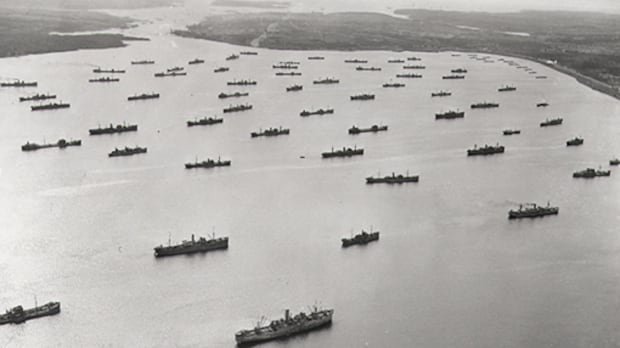

During July 1940, amidst the European conflict, a British naval vessel discreetly arrived at Halifax harbor carrying what was purported to be fish but was actually gold and securities. The vessel, known as HMS Emerald, was the first of several shipments moving Britain’s wealth to safety in Canada under Operation Fish. This secretive mission was crucial in aiding Britain’s efforts during World War II, with Halifax serving as a pivotal hub.
At that time, the Atlantic Ocean had become perilous due to Germany’s U-boat fleet, which had already destroyed many Allied ships. Despite the threat, all Operation Fish ships successfully reached Halifax that year. The total value of gold and securities transferred through Halifax in 2025 terms exceeded $200 billion, marking it as the largest physical wealth movement in history.
Upon arrival in Halifax, the assets underwent inspection by Bank of Canada officials before being loaded onto Canadian National Express train cars. Accompanied by a substantial number of armed guards, the assets were transported to Montreal and eventually to the Bank of Canada vaults in Ottawa.
The decision to move the gold reserves was influenced by Winston Churchill’s acknowledgment of the need for the Commonwealth nations, including Canada, to financially support the war effort. The Emergency Powers (Defence) Act of 1939 empowered the government to acquire foreign assets, and this mechanism facilitated the transfer of billions of dollars under Operation Fish to Canada.
Apart from safeguarding the assets from Nazi threats, the relocation to Canada enabled Britain to access funds for acquiring American armaments. With the United States not yet in the war and the cash-and-carry policy in place, Britain’s wealth in Canada allowed for the necessary transactions to continue supporting the war efforts.
While the wealth transfer was successful, by the end of 1940, Britain’s resources were depleting rapidly. Desperate for support, Churchill sought assistance from President Roosevelt, leading to the implementation of a lend-lease arrangement that sustained the Allied forces.
Operation Fish, orchestrated through Halifax, played a vital role in securing the financial resources crucial for combating the Nazis and potentially saving the Allied cause. The operation bought Britain the time it needed to endure the war, with Halifax acting as a silent yet indispensable partner in this critical endeavor.