

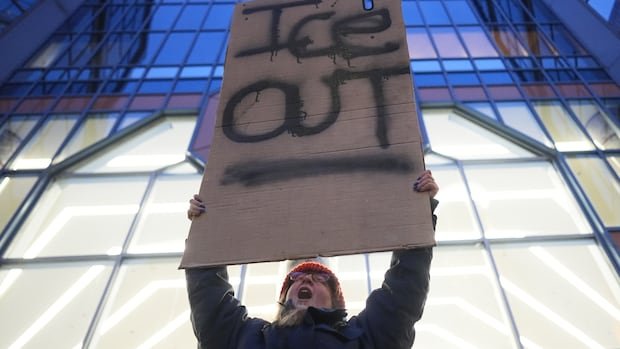

Minneapolis, a predominantly Democrat-led city, is the latest target of the Trump administration’s increased enforcement actions. Thousands of masked and armed federal agents have been deployed to conduct raids on businesses and residences, specifically targeting individuals believed to be residing unlawfully in the United States. This surge in federal presence follows similar operations in cities such as Los Angeles, Washington, Chicago, and Charlotte, N.C.
The city of Minneapolis has experienced a heightened level of federal intervention, leading to significant opposition from residents and instances of fatal violence. The deployment of federal agents to the Twin Cities of Minneapolis and St. Paul began in early December, with the U.S. Department of Homeland Security (DHS) announcing the addition of another 2,000 agents on January 6. This announcement sparked widespread protests, with thousands demanding the removal of Immigration and Customs Enforcement (ICE) from the city.
The escalation of federal enforcement actions in Minneapolis has resulted in two U.S. citizens being fatally shot by ICE agents, along with the detention of a five-year-old child and his father. The initial ICE operation in Minnesota’s Twin Cities last fall, targeting alleged fraud at the University of Minnesota, set the stage for the increased federal presence. Secretary Kristi Noem of the Department of Homeland Security hinted at further deployments, emphasizing that individuals residing illegally should leave the country.
President Trump’s disparaging remarks against Somali immigrants, labeling them as “garbage” and unwelcome in the U.S., have added to the tensions in Minneapolis. The state of Minnesota is home to a significant Somali immigrant population, with approximately 84,000 individuals of Somali descent residing in the Minneapolis-St. Paul area. The heightened ICE activities, including raids and arrests, have raised concerns within the community, with reports of racial profiling and fear among Somali Americans.
The surge of 2,000 additional ICE agents into Minneapolis in January marked the largest immigration operation conducted by the agency. The crackdown was linked to recent fraud scandals in Minnesota, involving Somali Americans in schemes amounting to hundreds of millions of dollars. Governor Tim Walz and other Democrats criticized the Trump administration for broadly associating the diaspora with the actions of a few individuals, leading to the surge of ICE agents in the Twin Cities.
Protests against the increased federal presence in Minneapolis intensified following the fatal shooting of Renee Nicole Good by an ICE agent, with conflicting accounts of the incident. Subsequent events, including arrests and contentious encounters with ICE, further fueled tensions in the city and nationwide. Calls for de-escalation followed conversations between President Trump, Governor Walz, and Mayor Frey, with indications that federal agents could begin withdrawing from the city.
As the situation unfolds, the Twin Cities remain active with immigration enforcement activities, raising questions about potential changes in approach following the discussions at the federal level. The interactions between federal agents and the community continue to be scrutinized amidst ongoing developments in Minneapolis.