

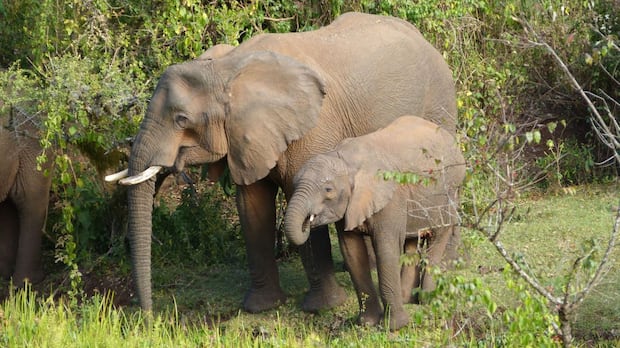


An ailing elephant gnaws on the bark of a tree that is commonly utilized in traditional medicine. A mother elephant combines a plant known for its healing properties with her milk and gives it to her offspring.
These accounts are among the insights gathered by researchers from local wildlife scouts and community members regarding African elephants in the Mount Elgon area of Kenya.
Elodie Freymann, who investigates self-medication in animals, shared with As It Happens guest host Helen Mann, “At this stage, I’ve ceased to be surprised.”
“Considering the intelligence and intricate social structures of elephants, it was only a matter of time before we uncovered the range of medicinal plants they utilize in their natural habitats,” Freymann added.
Freymann is a co-author of a recent study, released Thursday in the journal Nature, that leverages local insights to catalog numerous medicinal plants utilized by elephants in Mount Elgon.
According to the researchers, this study contributes to a growing pool of evidence highlighting the complexity and intelligence of elephants, underscoring the necessity of conserving the biodiversity upon which they depend.
Nevertheless, scientists advise that additional investigation is required to confirm that elephants are indeed self-medicating.
Leveraging local insights
The results stem from discussions with eight individuals from the Sabaot community, who have coexisted with the elephants for many years, including wildlife scouts, community guides, and village elders.
In certain instances, they recount elephants showing signs of weakness, fatigue, or digestive issues actively seeking particular plants recognized in local medicine. Additionally, they narrate instances of mother elephants providing their young with known medicinal plants.
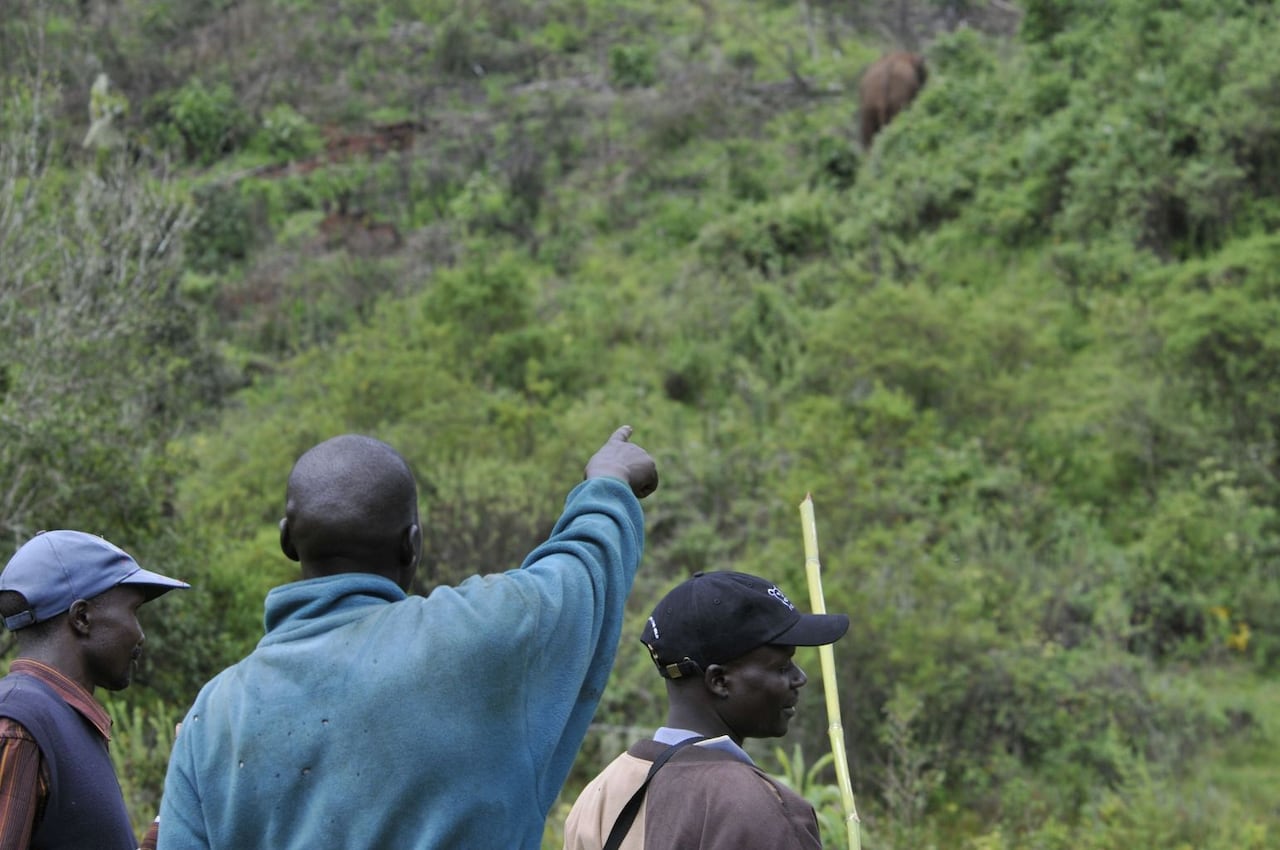
A Mount Elgon community member points out elephants in the distance. (Stephen Powles/Mount Elgon Foundation/Bernhard Nocht Institute for Tropical Medicine)
Of the 35 plants referenced in the interviews, 34 are used in local traditional medicine. Eight of the nine most frequently mentioned plants have been recognized in scientific studies as possessing pharmacological properties.
“We sought information directly from the source, engaging with people who have lived alongside these elephant populations for many years,” stated Freymann, a post-doctoral researcher at Brown University in Rhode Island.
“For a long time, Western science has not adequately elevated these local perspectives, and it is high time we start doing so.”
Further evidence required
Chase LaDue, an elephant ecologist not involved in the study, remarked that while the research serves as a valuable foundation for future exploration, it does not confirm that elephants are purposely medicating themselves or their young.
“There were no health records indicating that these elephants were actually unwell, and there was no assessment measuring whether consuming these plants had any effect,” LaDue, who serves as a curator at the Oklahoma City Zoo and executive director of the Sri Lanka Elephant Project, conveyed in an email.
“Young calves often explore their mothers’ mouths and sample whatever they are chewing. This is a primary method through which they learn what to eat. It’s possible that this behavior is being interpreted through a medical lens. I’d want to observe it before labeling it as medicinal.”
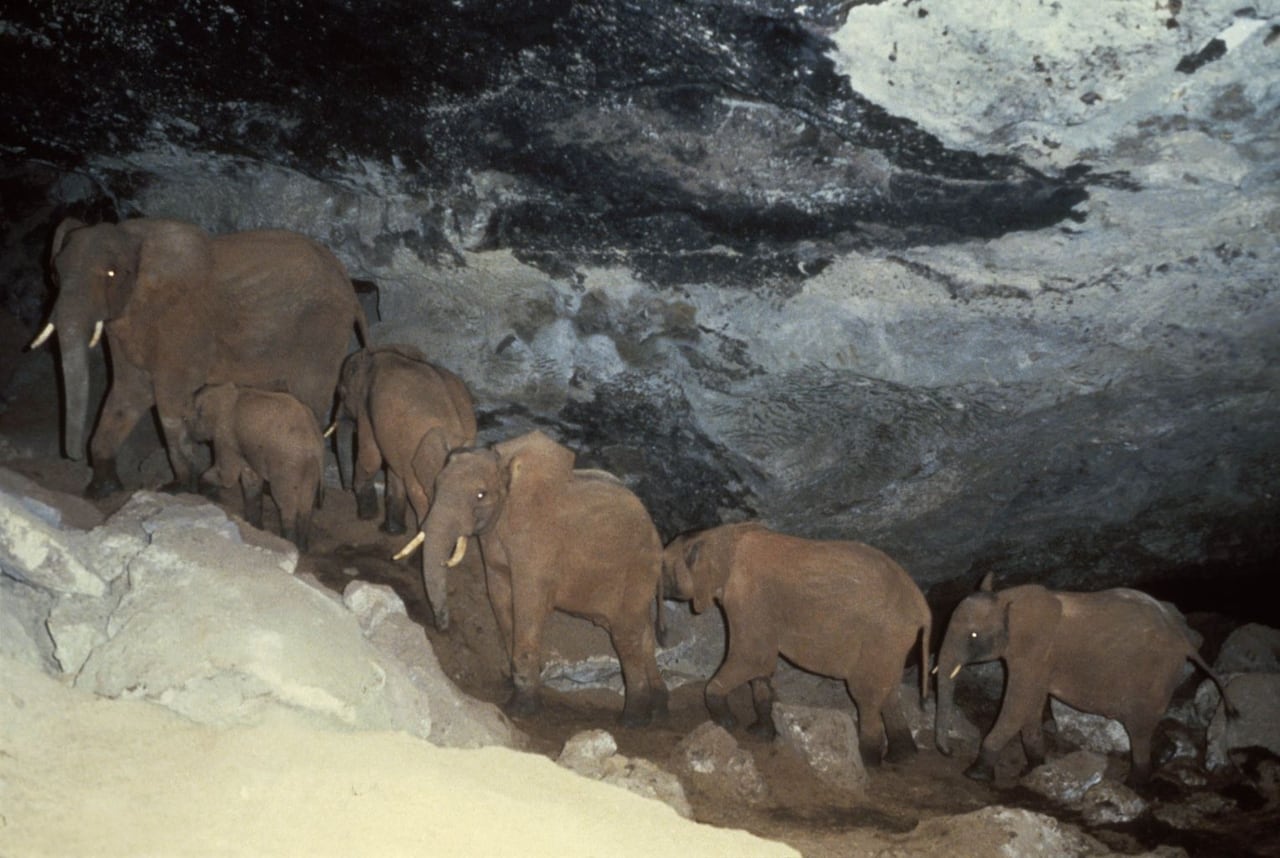
Mount Elgon elephants are known as salt-mining elephants because they explore caves and scrape the rocks to extract minerals for nutrition. (Ian Redmond/Bernhard Nocht Institute for Tropical Medicine)
He notes that local insights often guide researchers effectively but acknowledges the limitations of anecdotal evidence.
“If you were raised to believe a plant alleviates stomach issues in people, and then you observe an elephant consuming it, it is natural to make that connection. However, elephants consume a vast array of plants. In such a botanically rich area, it would be surprising if many of them did not have some recognized medicinal use,” he explained. “Overlap alone does not provide substantial information.”
Freymann argues that it is improbable that elephants are choosing to consume medicinal plants solely based on personal taste, as these plants typically contain bitter and unpleasant compounds.
“In small quantities, they can act as medicines, but in large quantities, they might be toxic,” she remarked. “These compounds are produced by the plants as a defense mechanism against herbivores.”
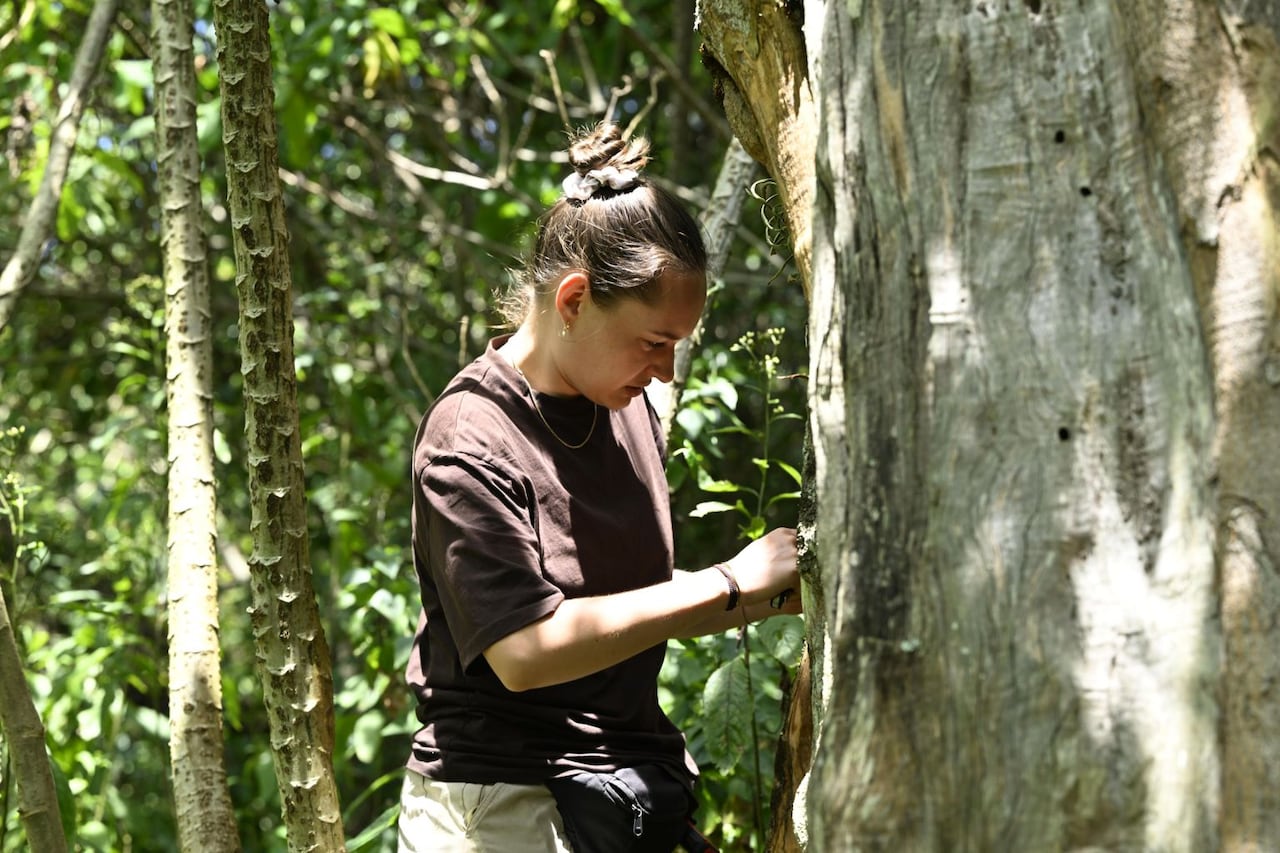
PhD student Henrike Wurm collects a bark sample in Kenya’s Mount Elgon region, where elephants have been seen consuming medicinal plants. (Kevin Maima/Mount Elgon Foundation/ Bernhard Nocht Institute for Tropical Medicine)
However, she concurs that this study serves as an initial step. Her research team has provided the interviewees with cameras to capture footage of elephants consuming the plants, which will be the next phase of their investigation.
“We have an outstanding opportunity to further our research in this area,” she stated.
-
When an earthquake hit, these elephants formed a protective circle around their youngest
-
Elephants may have names for each other that humans don’t know, study finds
If the researchers succeed in demonstrating that elephants are indeed self-medicating, they will join an increasing list of animals exhibiting similar behaviors, including chimpanzees, various great apes, some insects, and certain birds.
This further emphasizes the importance of promoting biodiversity, according to Freymann.
“The degradation of habitats does not only lead to the loss of food sources for animals. It also signifies a loss of territory and a reduction in medicinal resources,” she stated.
“In our rapidly changing world with fluctuating climates and evolving ecosystems, ensuring animals have access to essential medicines is crucial for their well-being.”