

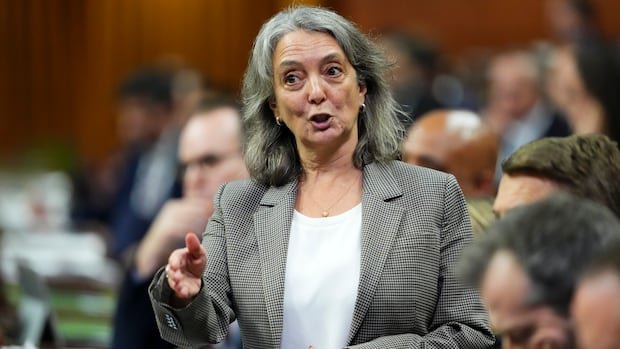

Environment and Climate Change Minister Julie Dabrusin has contradicted statements made by Steven Guilbeault, who recently stepped down from his cabinet position due to concerns over a memorandum of understanding between Ottawa and Alberta, suggesting that Canada is undermining aspects of its climate strategy.
In an interview on CBC’s “Rosemary Barton Live,” Dabrusin expressed her disagreement with Guilbeault’s interpretation of the memorandum, emphasizing that she does not view it as a step backward or as a termination of existing programs. The memorandum, which outlines a potential route for a new oil and gas pipeline to British Columbia sought by Alberta, includes commitments from Ottawa to refrain from enforcing its oil and gas emissions cap and to temporarily suspend clean electricity regulations in Alberta pending a revised carbon pricing agreement.
Guilbeault, who previously served as the environment minister under former Prime Minister Justin Trudeau, raised concerns about the potential impact on climate initiatives in a statement announcing his resignation. Dabrusin clarified that the language in the memorandum regarding clean electricity regulations is not an exemption but rather a provision that allows for negotiations with provinces to demonstrate their ability to achieve the regulatory goals in their own manner.
Regarding assurances that Alberta will meet the specified objectives, Dabrusin highlighted the necessity for the province to achieve the set goals to facilitate an agreement. The memorandum sets a deadline of April 1, 2026, for Canada and Alberta to reach agreements on carbon pricing equivalency and methane equivalency.
Furthermore, the memorandum outlines a commitment to engage with Indigenous Peoples in Alberta and British Columbia, with the participation of the B.C. government in discussions with B.C. First Nations. Maureen Nyce, the elected chief councillor of the Haisla Nation in B.C.’s North Coast, expressed skepticism about the pipeline’s feasibility, citing potential challenges such as undoing emissions caps and undermining environmental protection legislation.
B.C. Minister of Energy and Climate Solutions Adrian Dix echoed concerns about the project’s viability, emphasizing the need to focus on tangible projects to drive economic growth in Canada. The memorandum emphasizes the importance of private sector involvement in constructing and financing pipelines, with Indigenous co-ownership and a route that enhances access to Asian markets.
Paul Colborne, the president and CEO of Surge Energy, anticipates significant interest from various companies in participating in the project, citing a favorable regulatory environment for energy production and pipeline construction. He emphasized the need for a balanced approach to energy production and emissions reduction, noting a shift towards attracting foreign investment in the sector.
Alberta Minister of Energy Brian Jean emphasized the importance of securing private sector support for the project, characterizing the agreement as a positive development for all parties involved and underscoring its role in fostering national cooperation and unity.
In summary, the memorandum of understanding between Ottawa and Alberta has sparked debates and uncertainties surrounding its implications for climate policies, Indigenous engagement, and economic development in Canada.