

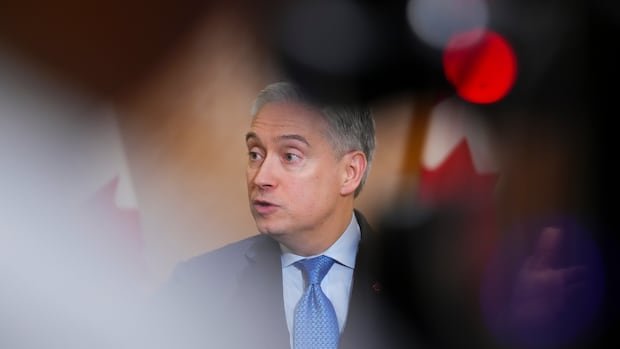

Finance Minister François-Philippe Champagne stated that the Canadian government has no intention of covering the $1 billion US cost for a permanent seat on the “Board of Peace” proposed by U.S. President Donald Trump for the governance and reconstruction of Gaza. Champagne emphasized that Canada would not contribute financially if it were to become a member of the board. This announcement follows Prime Minister Mark Carney’s acceptance of the invitation to join the board, with Carney highlighting that further details and terms of reference need to be clarified before a final decision can be made.
The board, set to be led by Trump indefinitely, allows member states to hold three-year terms unless they make a $1 billion US contribution to sustain the board’s operations and secure permanent membership. The White House stated that permanent membership is extended to partner countries demonstrating a strong commitment to peace, security, and prosperity.
When asked about a permanent seat, Carney emphasized the importance of providing direct financial assistance to Palestinians in Gaza to enhance their well-being. Canada has not been requested to make any payments at this point, and Carney stressed the need for humanitarian aid to reach Gaza unimpeded to make a meaningful impact.
Apart from the board, Trump has appointed individuals to executive committees to oversee the Gaza process, drawing criticism from Israel over the involvement of officials from Turkey and Qatar. The operational tasks are assigned to 15 Palestinian technocrats, vetted by Israel’s Mossad, to take over daily functions from the Hamas government.
While some countries have shown caution due to pending details, the United Arab Emirates and Hungary have accepted the invitation, with concerns raised privately about the board’s potential impact on the United Nations’ authority. The second phase of the Gaza ceasefire deal has been initiated by the United States, focusing on more complex challenges such as disarming Hamas and deploying an international peacekeeping force.
The global response to the board proposal remains mixed, with ongoing concerns about the initiative’s broader implications and its potential ramifications for conflict resolution beyond Gaza.