

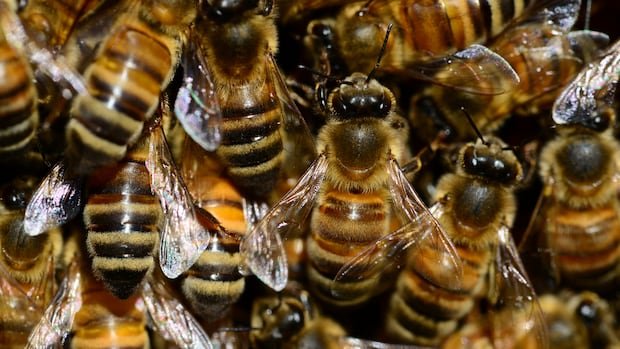

In Canada, the chilly weather presents challenges for beekeepers, as highlighted in a 2025 report by the Canadian Association of Professional Apiculturists, showing that more than 41% of honeybee colonies in Alberta failed during that winter. Addressing this issue, Beekeeping Innovations Ltd., based in the Calgary area, has introduced a novel solution called the Bee Cube. This innovative apiary offers a fully climate-controlled environment to accommodate multiple honeybee colonies and is specifically designed in Okotoks.
Herman Van Reekum, the founder and CEO of the company, emphasized the primary objective of the Bee Cube, stating, “The goal is to get bees through the winter in a comfortable environment.” Apart from aiding bees in surviving the harsh winter conditions, the Bee Cube also presents an opportunity to revolutionize Canada’s beekeeping industry. Van Reekum explained, “The real goal that we’ve figured out is how to make queens, how to reproduce queens in a very safe, in a very economical way, and this is an ideal system for that.”
The main focus of utilizing the Bee Cube is to produce queens in large quantities locally, eliminating the need to import them to Canada. Currently, Canadian beekeepers heavily rely on importing around 300,000 foreign queen bees annually from regions like Australia, New Zealand, California, and Hawaii. Van Reekum highlighted the drawbacks of introducing foreign queens, citing potential challenges in acclimatization and the risk of importing harmful pests such as varroa mites and the potentially devastating Tropilaelaps mite.
By breeding local queens, beekeepers aim to reduce mite infection rates and develop bees with genetic resilience to endure the Canadian winter. Van Reekum emphasized the significance of maintaining a domestic source of queens to enhance the safety and sustainability of the beekeeping industry.
The process of queen bee production involves careful selection and nurturing of larvae, eventually leading to the emergence of new queens. Once mature, these queens are introduced to their own hives to begin laying eggs and establishing colonies. Van Reekum expressed plans to significantly scale up queen production, aiming to produce 5,000 queens this year, compared to the 800 queens produced in the previous year.
Alberta stands as Canada’s leading honey producer, housing nearly 40% of the country’s bee colonies. The province holds a prominent position in the Canadian honey industry, contributing significantly to the national honey harvest valued at $241 million in 2025. Beyond honey production, Canadian beekeeping plays a vital role in agricultural pollination services, supporting various crops and contributing billions to the agricultural economy.
Van Reekum emphasized the crucial role of bees in pollinating crops, stating, “Thirty-three per cent of what we eat comes from bees pollinating our crops.” He highlighted the essential contribution of honeybees in pollinating canola, orchards, blueberries, and other food crops, underscoring the indispensable role of bees in sustaining agriculture and food production.