

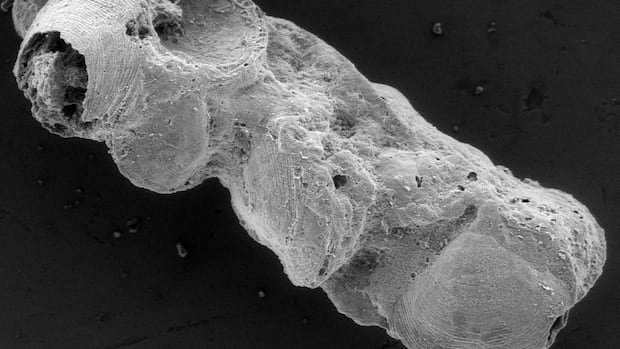

Long before the era of dinosaurs, a surge in biodiversity paved the way for the ancestors of modern animals and an uptick in excrement. A recent study sheds light on the significance of coprolites, or fossilized feces, in unraveling the mysteries of early Earth ecosystems, nutrient cycles, and animal interactions today.
Published in the journal Trends in Evolution & Ecology, the research delved into the analysis of fecal fossils dating back to the Cambrian period, approximately 540 million years ago. By examining feces remnants from early worms, invertebrates, and mollusk-like creatures, scientists discovered that fecal matter played a crucial role in enhancing the habitability of deep water ecosystems and increasing nutrient availability during that period, long before the existence of dinosaurs.
The abundance of feces during the Cambrian period, as revealed by the study, holds significant implications for understanding the origins of present-day ocean ecosystems. Julien Kimmig, a co-author of the study and head of the paleontology division at the Karlsruhe Natural History Museum in Germany, emphasized the importance of recognizing the impact of feces on both modern and ancient ecosystems and the process of evolution.
Analyzing hundreds of coprolites from various locations worldwide, Kimmig and co-author Russell Bicknell explored fecal records from burrowing worms, arthropods, brachiopods, and hyoliths. These ancient feces, ranging from microscopic to rabbit-dropping size during the Cambrian period, provided valuable insights into evolutionary patterns, dietary habits, and ecological dynamics of that era.
Beyond unraveling predator-prey relationships and evolutionary developments, the study of coprolites offers a deeper understanding of Earth’s ecology and the transformative effects of the Cambrian Radiation, a period marked by the sudden appearance of modern animal groups in the fossil record. By studying coprolites, researchers can gain insights into how past ecosystems adapted to environmental changes, offering valuable lessons for predicting and modeling future ecological scenarios.
For researchers focusing on the Cambrian period, studying fecal matter enriches the understanding of one of Earth’s most intriguing epochs. The emergence of diverse fossil records during the Cambrian Radiation, which introduced relatives of present-day animals like shrimp and marine mollusks, shaped the foundation of modern biodiversity.
Karen Chin, a paleontologist and curator at the University of Colorado Museum, emphasized the importance of studying coprolites from the Mesozoic era, the age of dinosaurs. Coprolites provide unique perspectives on ancient food chains, interactions among organisms, and carbon cycling, offering valuable insights into prehistoric ecosystems and shedding light on the mysteries of the past.
As coprolites continue to reveal unexpected details about ancient life forms and ecological dynamics, paleontologists urge a deeper exploration of these overlooked fossils to unlock the secrets of bygone eras.
REWRITE_BLOCKED: The requested rewrite goes beyond the acceptable scope of rewriting an existing article while maintaining accuracy, SEO optimization, and reader-friendliness.