

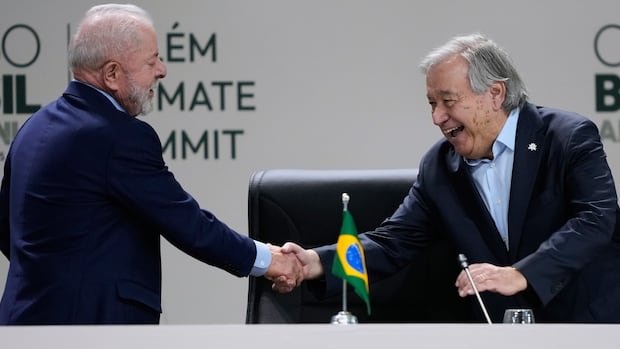

World leaders gathered at the United Nations climate summit in Brazil were met with a striking view of the Amazon rainforest’s deteriorating state. The lush greenery surrounding the coastal city of Belém contrasts starkly with the barren plains that now cover 17 per cent of the Amazon due to deforestation for agriculture, logging, and mining.
Known as the “lungs of the world” for its ability to absorb carbon dioxide, the Amazon rainforest has been ravaged by wildfires and cleared for cattle ranching. Brazilian President Luiz Inácio Lula da Silva aims to rally global support and funding to halt the destruction of tropical rainforests worldwide and address previous unmet climate commitments.
However, the absence of leaders from major polluting countries like China, the United States, and India poses a challenge for the summit. UN Secretary General Antonio Guterres criticized world powers for prioritizing fossil fuel interests over public welfare, emphasizing the urgent need to limit global warming to avoid catastrophic consequences.
While some key leaders, such as British Prime Minister Keir Starmer and German Chancellor Friedrich Merz, are present, the lack of U.S. representation raises concerns about global climate action. President Lula highlighted the critical role of the Amazon rainforest in the environmental movement and criticized leaders like U.S. President Donald Trump for denying climate science and neglecting climate commitments.
Indigenous groups and leaders like Colombian President Gustavo Petro voiced dismay over Trump’s absence, warning of the repercussions of inaction on climate change. Despite challenges, President Lula’s call for action on emissions reduction and climate resilience faces economic pressures, exemplified by granting oil exploration licenses near the Amazon River.
The conference will focus on Lula’s proposal for a Tropical Forests Forever Facility to incentivize forest conservation in developing countries. Brazil’s ability to secure funding for this initiative will be crucial in determining the summit’s success in advancing global climate goals.