


Hating a movie can be just as engaging and possibly more enjoyable than loving it. A film that is exceptionally foolish, poorly conceived, or morally wrong can offer as much material for contemplation and conversation as one that is truly impactful. In both scenarios, there is at least something worth caring about.
This is what makes encountering a production like “The Social Reckoning” so disheartening. The sequel, written and directed by Aaron Sorkin, to “The Social Network” – the remarkable 2010 film detailing the origins of Facebook written by Sorkin and directed by David Fincher – falls into the category of those rare, reprehensible anti-artistic endeavors.
“The Social Reckoning” is so shallow and unoriginal that it evades genuine animosity, despite attempting to position itself as perpetually relevant. In essence, it is such a insulting bore that it lacks adequate insight or perspective to even disagree with, let alone passionately dislike.
Focusing on the issues of social media’s negative impacts and corporate-led groupthink, the film could potentially exemplify the very problem Sorkin aims to uncover: the abundance of subpar, uninteresting “content” cluttering our online platforms. However, this mishandling of rich source material involves a cast and crew comprising some of the industry’s most intriguing talents.
The narrative of “The Social Reckoning” delves into Facebook’s era of exponential growth, aiming to critique one of the three tech titans of doom. The other two are portrayed in Alex Gibney’s documentary “Musk” and Luca Guadagnino’s Sam Altman/OpenAI analysis “Artificial.” The implicit message is that this film is a sharp and timely creation that will revolutionize perspectives and challenge the status quo.
However, instead of a profound revelation akin to “Spotlight,” the audience is presented with characters like Wall Street Journal reporter Jeff Horwitz, played by Jeremy Allen White, and Facebook product manager Frances Haugen, portrayed by Mikey Madison. They quickly join forces to uncover a secretive malpractice known as MSI (Meaningful Social Interactions), which has contributed to governmental destabilization, cognitive decay, and truth distortion.
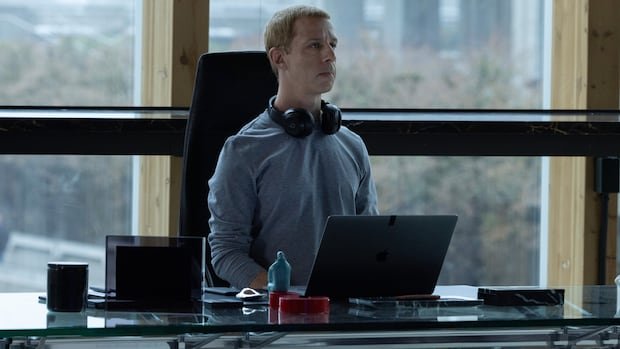
Jeremy Strong’s portrayal of Mark Zuckerberg in a downward spiral, both in terms of public relations within the story and his depiction on screen, lacks the depth and intrigue seen in previous interpretations. Despite Strong’s efforts to accentuate Zuckerberg’s eccentricities, the character feels peripheral to the plot.
The film’s lackluster narrative and uninspired storytelling can be attributed to Sorkin’s direction. The narrative falls short of expectations set by previous works, delivering a disappointing and lackluster experience. The film fails to engage viewers with its topical issues and instead meanders through clichés and self-referential journalism tropes.
Ultimately, “The Social Reckoning” is marred by its lack of risk-taking, specificity, and purpose. It fails to incite any strong emotions, landing in a realm of mediocrity and timidity. This absence of boldness and direction makes it a forgettable and unremarkable piece of art, lacking the substance and depth needed to leave a lasting impact.