

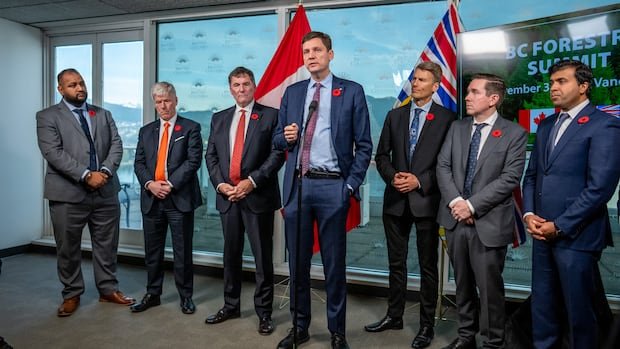

British Columbia Premier David Eby has confirmed that the province has decided to halt a planned series of anti-tariff advertisements targeting the American public. Eby, in conjunction with Dominic LeBlanc, the federal minister responsible for Canada-U.S. trade, emphasized the importance of aligning communication strategies with U.S. authorities amid discussions on softwood lumber tariffs.
Eby indicated that the decision to forego the ad campaign came without a direct request from Minister LeBlanc, acknowledging concerns raised by various stakeholders, including the federal government, regarding the potential impact of the advertisements. This move follows U.S. President Donald Trump’s recent cancellation of trade talks with Canada, citing Ontario’s anti-tariff ad campaign as a contributing factor.
During a summit in Vancouver addressing challenges in the forest industry due to American tariffs, Eby pledged to collaborate with federal officials on communication strategies and sector support initiatives. He underscored the need for a unified approach in engaging with American counterparts. Highlighting the significance of the forest industry in Canada, Eby stressed the importance of respectful treatment for the sector, which surpasses the automotive industry in scale.
Eby expressed confidence in the federal government’s understanding of the industry’s concerns post-meeting, emphasizing the collective effort to navigate communication channels effectively with American counterparts. In response to the Trump administration’s imposition of significant duties on Canadian companies and national security concerns, Eby announced the establishment of a working group to provide necessary support for the sector.
Kim Haakstad, President of the B.C. Council of Forest Industries, welcomed the collaborative efforts between governments and industry stakeholders to address market challenges and preserve employment opportunities. Haakstad emphasized the group’s focus on sustaining operational mills, advocating for a new softwood lumber agreement, and expediting the distribution of the $1.2 billion federal support package allocated for the industry.
Overall, the decision to halt the anti-tariff ad campaign reflects a strategic shift towards fostering cohesive communication and partnership between provincial and federal entities to safeguard the Canadian forest industry’s interests.