

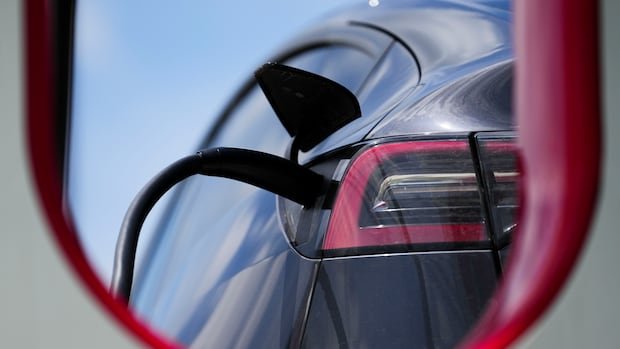

After enduring a period of slow sales, electric vehicles are experiencing a surge in demand due to rising gas prices and reinstated government incentives. Since January, when the Liberal government reintroduced incentives, EV sales have been on the rise. The escalation in gas prices following the U.S. and Israel’s strikes on Iran triggered a Middle East conflict, propelling the surge in EV sales.
Statistics Canada data reveals a notable increase in EV sales in Canada. In January, 8,672 new EVs were purchased, which escalated to 12,547 in February, 21,574 in March, and slightly dipped to 17,795 in April. Overall, EV sales in the first four months of 2026 surged by 20.8% compared to the same period in 2025.
Not only are more Canadians purchasing EVs, but a significant percentage of car shoppers are also considering making the switch. According to an annual J.D. Power survey, 34% of respondents are now likely to buy an EV as their next vehicle, up from 28% the previous year. The resurgence in interest is attributed to the affordability factor, driven by high gas prices and the reintroduction of EV incentives.
Industry experts affirm that consumers are recalculating their choices based on economics. J.D. Ney, the managing director for J.D. Power Canada, stated that Canadians are evaluating the cost-effectiveness of EVs amid the prevailing circumstances.
In a bid to further boost sales, the government reintroduced incentives in February, offering discounts of up to $5,000 for fully electric vehicles and up to $2,500 for hybrids made in Canada or countries with free trade agreements. These incentives have leveled the playing field, making EV prices more competitive with gas-powered vehicles.
Shift Electric Vehicles, a used-EV dealership in Burlington, Ont., has witnessed an uptick in inquiries, with customers citing escalating gas prices as a driving factor in considering EV purchases. Although fuel prices have slightly eased from recent peaks, the national average remains high, prompting some consumers to future-proof their expenses by transitioning to EVs.
The prospect of low-cost Chinese EVs entering the Canadian market has also captured consumer interest. Ney highlighted that the affordability of Chinese brands could appeal to buyers, especially those eyeing EV purchases. While regulatory challenges may impede the swift entry of Chinese brands like BYD or Chery, the interest in more economical options remains high.
Despite concerns like range anxiety and charging infrastructure limitations, the reduced cost has alleviated major worries for car buyers. The economic landscape, coupled with enhanced affordability and incentives, is expected to sustain the momentum in EV sales. While a substantial sales surge may not be imminent, the growing popularity of EVs signifies a notable shift in the automotive market landscape.