

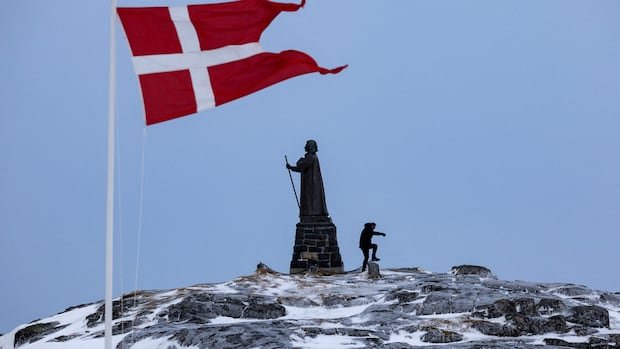

European capitals are on high alert as concerns over the Trump administration’s aggressive stance towards Greenland have escalated into a crisis. European leaders have set new boundaries, cautioning the White House that any transgression could lead to the collapse of NATO, the long-standing transatlantic military alliance. Despite these warnings, the White House has counteracted with threats of military action against allied nations.
The unprecedented challenge posed by the U.S., which has historically supported European security, is a unique crisis for Europe. The recent U.S. military operation involving Venezuela’s Nicolás Maduro has prompted European leaders to confront Trump’s unilateral tendencies.
In a joint statement, seven European leaders emphasized that decisions concerning Greenland should be made by its people and Denmark, the island’s current overseer. They urged Trump to collaborate with NATO to address security interests in the Arctic region and urged him to cease intimidating Denmark.
While European leaders like French President Emmanuel Macron and German Chancellor Friederich Merz advocate for diplomacy to preserve the NATO alliance, the White House remains resolute in its pursuit of Greenland. This aggressive stance raises doubts about the effectiveness of European diplomacy.
The U.S.’s military supremacy, with a substantial budget compared to European NATO members, gives it unparalleled global military influence. Despite efforts by European nations to enhance their military capabilities, they still rely heavily on American support for defense.
Trump’s interest in Greenland, coupled with his administration’s broader agenda to distance from Europe, has strained transatlantic relations. The U.S. administration’s proposals to Greenland, such as independence with U.S. military access and duty-free market entry, have sparked international debate.
The potential ramifications of U.S. unilateral action on Greenland include the destabilization of NATO and post-Second World War alliances. European leaders have emphasized the importance of respecting Greenland’s autonomy and avoiding military conflict within NATO countries.
The geopolitical tensions highlight the delicate balance between American interests, European security, and Greenland’s sovereignty. The European strategy aims to avert a crisis that could jeopardize longstanding alliances and international security.