

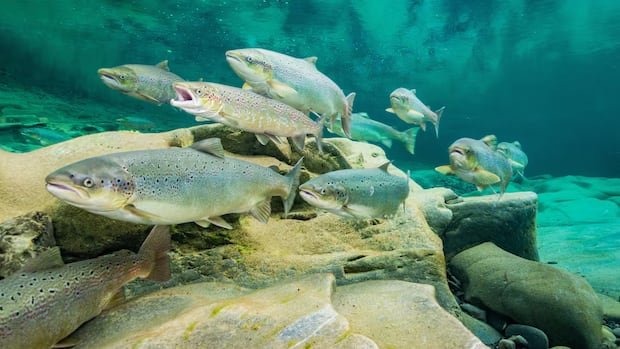

A dispute is unfolding in Atlantic Canada over salmon farming. On one side are fish farmers operating in ocean pens, while the Atlantic Salmon Federation stands on the other. The conflict involves over $80 million in new federal funding designated for wild Atlantic salmon populations’ restoration.
The public dispute began with an open letter from Tom Taylor, the executive director of the Atlantic Canada Fish Farmers Association, addressed to Prime Minister Mark Carney and Fisheries Minister Joanne Thompson. The letter demands that the federation be excluded from receiving any portion of the $81.7 million federal fund aimed at stabilizing and rebuilding wild Atlantic salmon populations.
According to Taylor, the federation, which he describes as a “foreign-funded, activist organization,” is allegedly aiming to dismantle the farmed salmon industry in Atlantic Canada. He accuses the federation of spreading misleading information to discourage the consumption of farmed salmon. Taylor emphasized that while the federation does some valued conservation work, it has crossed a line by intentionally disseminating misinformation about the farmed salmon industry.
One of the federation’s campaigns, known as “Off the Table,” aims to persuade the hospitality industry to remove farmed salmon from menus by claiming it is harmful to the environment and people, as well as wild salmon. Taylor has urged the government to review the federation’s charitable status and prevent it from accessing the new funding, expressing concerns that the money could be misused for anti-aquaculture campaigns.
In response, Neville Crabbe, the vice-president of communications for the Atlantic Salmon Federation, clarified that their campaign seeks to educate the hospitality industry about the negative environmental impacts of farmed salmon. Crabbe emphasized that the federation has been critical of the industry for its environmental consequences for over two decades and is not targeting the entire industry but opposes its geographical expansion.
The federation has pledged to supplement the government’s funding with $25 million raised from individuals and foundations. They view wild Atlantic salmon as crucial for maintaining healthy river ecosystems and as a significant cultural and economic asset for the region.
While the fish farmers stress the importance of their lawful industry and highlight conservation efforts like the Fundy Salmon Recovery program, tensions persist between the two sides. Fish farmers are keeping a close eye on the West Coast ban on open net-pen salmon farming in British Columbia, fearing a similar fate for their operations. Both parties remain steadfast in their positions, with the farmers hoping that the federation will refocus on genuine conservation objectives.