

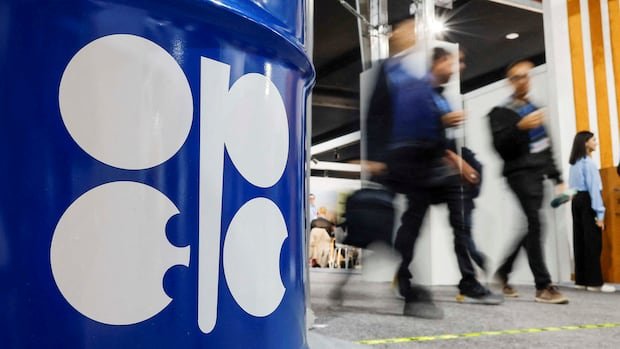

The United Arab Emirates has announced its decision to withdraw from the Organization of the Petroleum Exporting Countries (OPEC) and OPEC+ effective Friday amidst a severe energy crisis triggered by the Iran conflict, revealing internal discord among Gulf nations.
Having been a longstanding member of OPEC since 1967 through its emirate of Abu Dhabi, the U.A.E. became an independent country in 1971. OPEC+, formed in 2016, is a coalition with other oil-producing nations.
Although OPEC controls around 40% of global oil production, its influence has diminished in recent years due to increased oil production by the United States.
The departure of the U.A.E., one of the largest producers within the group, undermines OPEC’s authority over worldwide oil distribution and exacerbates tensions with neighboring Saudi Arabia, a key figure in OPEC.
This move may enable the U.A.E. to boost its oil output once shipments through the Gulf resume, as it will no longer be bound by OPEC production limits.
The decision was communicated through the state-run WAM news agency, emphasizing the U.A.E.’s long-term strategic and economic vision and its commitment to a responsible role in global energy markets.
U.A.E. Energy Minister Suhail Mohamed al-Mazrouei stated that the choice was made after careful consideration of the country’s energy strategies without consulting with Saudi Arabia or other countries.
The U.A.E. has experienced strained relations with Saudi Arabia over political and economic issues in the Middle East, particularly amid Iranian attacks against both countries.
The Gulf Cooperation Council nations have faced challenges in exporting oil through the Strait of Hormuz due to Iranian threats and assaults on vessels.
The U.A.E.’s departure from OPEC is viewed as favorable for U.S. President Donald Trump, who has criticized OPEC for driving up oil prices and linked U.S. military support to Gulf countries with oil costs.
The decision follows the U.A.E.’s criticism of fellow Arab states for not adequately safeguarding it against Iranian attacks during the conflict.
Speculation about the U.A.E. leaving OPEC had circulated due to its opposition to what it deemed as restrictive production quotas. With global spare capacity dwindling, the oil market is becoming increasingly tight.
Analyst Jorge Leon highlighted the U.A.E.’s importance as one of the few OPEC members, along with Saudi Arabia, with spare production capacity, raising concerns about Saudi Arabia’s role in stabilizing the market.
Heather Exner-Pirot, an energy expert, noted that the U.A.E.’s exit is not expected to have an immediate impact on oil markets due to ongoing global supply constraints caused by the Iran conflict. However, in the long term, it could lead to market instability and oversupply once the situation in the strait stabilizes and U.A.E. oil production increases.
Exner-Pirot emphasized the evolving geopolitical landscape where multilateral organizations are losing significance and nations are prioritizing individual interests.