

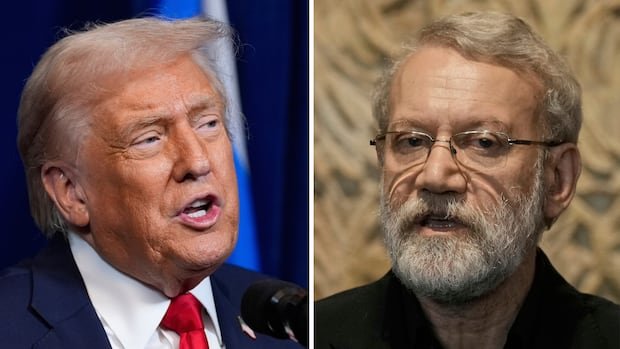

U.S. President Donald Trump and Iranian officials engaged in a war of words on Friday amidst widespread economic protests in Iran, escalating tensions following America’s bombing of Iranian nuclear facilities in June. Trump issued a warning on his Truth Social platform, cautioning Iran against harming peaceful protesters and pledging U.S. intervention if needed. The demonstrations, fueled partly by the devaluation of Iran’s rial currency, have led to at least seven fatalities.
In response, Ali Larijani, a former parliament speaker and current secretary of Iran’s Supreme National Security Council, accused Israel and the U.S. of fueling the protests on the social platform X. Larijani, without providing evidence, criticized Trump for potential U.S. interference in Iran’s internal affairs, warning of regional chaos and damage to U.S. interests. He also highlighted the historical consequences of American involvement in conflict areas, emphasizing the need for self-reliance among U.S. troops.
The exchange between Trump and Iranian officials alluded to the significant U.S. military presence in the region. Iran previously targeted Al Udeid Air Base in Qatar in response to U.S. strikes on three nuclear sites during a conflict involving Israel. Ali Shamkhani, an adviser to Supreme Leader Ayatollah Ali Khamenei, cautioned against any threats to Iran’s security, emphasizing the Iranian people’s awareness of past American interventions in various regions.
The ongoing protests, now in their sixth day, mark Iran’s largest demonstrations since 2022 when the death of Mahsa Amini triggered nationwide unrest. While the current protests have not reached nationwide scale, they have become a significant challenge for President Masoud Pezeshkian’s administration, which faces economic turmoil and public discontent. Despite efforts to signal a willingness to engage with protesters, the Iranian government continues to grapple with economic instability, with the rial facing rapid depreciation, sparking initial protests.
The protests, centered on economic grievances, have also witnessed calls for reform within Iran’s theocratic system. Following earlier conflicts, Iran declared a halt to uranium enrichment across its sites, signaling openness to negotiations to alleviate sanctions. However, talks with Western powers, including the U.S. and Israel, have yet to materialize amid warnings against Iran’s nuclear ambitions.