

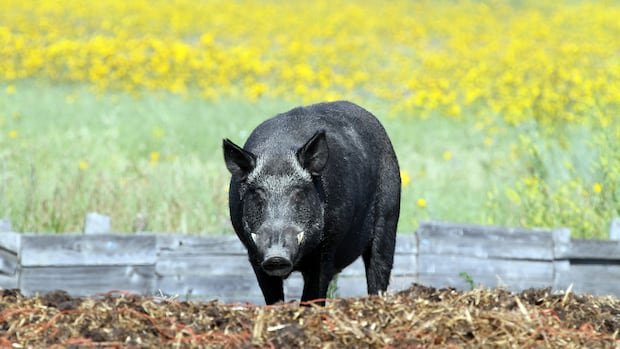

Thermal drones, in conjunction with emerging artificial intelligence technology, are proving effective in enhancing Alberta’s defenses against invasive and destructive wild boar. Hannah McKenzie, a specialist in wild boar from the Alberta government, highlighted the importance of using various tools to address this issue, with drones playing a significant role.
A recent report outlined a partnership between Alberta Agriculture and the University of Calgary to explore a novel aerial surveillance approach for tracking wild boar, which pose a growing threat to agriculture and ecology in the Prairies. The report, released on the Alberta government website in March, emphasized the innovative and non-intrusive nature of automated drones equipped with infrared cameras compared to traditional detection methods.
In the spring of 2024, researchers employed thermal drones with heat radiation sensors to detect wild boar bodies. By utilizing thermal imaging primarily at night, the researchers could capture distinct heat signatures of the boars against the cooler background. Subsequently, artificial intelligence algorithms were trained to analyze the footage and accurately identify and count the wild boar spotted.
Traditional tracking methods like ground tracking and helicopter surveys often fall short due to the nocturnal behavior and elusive nature of wild boar. Ryan Brook, a lead researcher at the University of Saskatchewan, emphasized the value of aerial surveillance in overcoming these challenges posed by the intelligent and cautious behavior of wild boar.
The feral pig population in Alberta comprises a mix of Eurasian wild boar and hybrid breeds, including super pigs resulting from crossbreeding with domestic pigs. These hybrids are highly destructive, weighing between 55 and 115 kilograms and known for their rapid breeding rate and habitat destruction. The contamination of water sources and spread of diseases like African swine fever pose significant risks to the provincial pork industry, underscoring the urgency of wild boar management.
Previous wild boar programs in Alberta have been reactive, focusing on monitoring, trapping, and implementing stringent regulations to control their population. The introduction of drones in the ongoing eradication efforts marks a proactive shift in strategy. The drone project aims to enhance detection accuracy, establish a standardized database for sightings, and develop predictive habitat mapping to target feral herds effectively.
The project, conducted at two Alberta boar operations, covered over 3,000 kilometers during the spring of 2024. AI models trained on thermal images from the drones exhibited over 75% accuracy in detecting wild boar herds. Despite these promising results, challenges remain, particularly in distinguishing small piglets and differentiating wild boar from other wildlife.
The development of a habitat suitability map, integrating public sightings and habitat data, offers insights into potential wild boar hotspots in Alberta. This modeling approach, led by veterinary epidemiologists at the University of Calgary, will guide future mitigation efforts by identifying high-risk areas for wild boar infestation. Collaborative long-term monitoring programs, like the drone project, are crucial in combating the cryptic behavior of wild pigs and require a science-based national strategy for long-term eradication.