


Sudan’s Rapid Support Forces (RSF) have accepted a proposal from the United States and Arab nations for a humanitarian ceasefire and are willing to engage in discussions regarding a cessation of hostilities, as stated in a release on Thursday.
Despite previous ceasefire attempts between the RSF and the Sudanese army during their 2½-year conflict, none have been successful. The U.S. government under President Donald Trump has expressed efforts to halt the fighting in Sudan.
In response to the RSF’s recent capture of the famine-stricken city of El Fasher, the Sudanese army has not yet provided a formal response. El Fasher, besieged for over 18 months, was the final military stronghold in western Darfur.
The RSF expressed readiness to implement the agreement and initiate talks on halting hostilities and outlining the core principles guiding Sudan’s political process, according to a statement by the RSF.
While the Security and Defense Council, led by the military, recently convened without a definite answer to the proposal, key figures and supporters within the army have voiced objections.
A Sudanese military official, speaking anonymously to The Associated Press, indicated that the army is receptive to the proposal but insists on a complete withdrawal of the RSF from civilian areas and surrendering weapons, aligning with previous peace initiatives, before agreeing to a truce.
Massad Boulos, a U.S. advisor on African affairs, conveyed ongoing collaboration with both the Sudanese army and RSF to establish a humanitarian ceasefire, with a potential announcement forthcoming. The proposed plan, spearheaded by the U.S., outlines a three-month humanitarian ceasefire followed by a nine-month political resolution process.
The conflict between the RSF and the military originated in 2023 amidst escalating tensions between the former allies tasked with overseeing a democratic transition post a 2019 uprising.
Reportedly, the war has claimed the lives of at least 40,000 individuals and displaced 12 million, according to the World Health Organization (WHO). However, aid agencies suggest the actual death toll could be significantly higher. Additionally, over 24 million people are currently confronting severe food insecurity, as per the World Food Program.
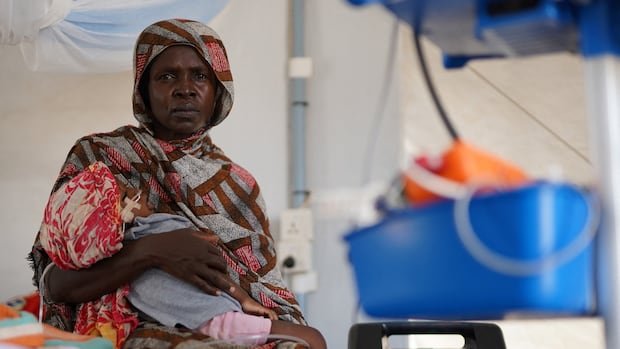
With Sudan experiencing one of the most severe displacement crises globally, the recent events in El Fasher have led to further displacements. Reports indicate that the RSF engaged in violence, including the killing and abduction of civilians, prompting international concern.
Islamic Relief highlighted the impending collapse of community kitchens that serve as vital resources for numerous families, emphasizing the critical food shortages affecting 83% of families in east and west Sudan.
The Integrated Food Security Phase Classification identified El-Fasher and Kadugli as regions afflicted by famine, attributing the crisis to man-made factors such as ongoing conflict, insecurity, restricted access to food, and limited humanitarian aid corridors.
Efforts are underway to facilitate aid delivery to communities in need by establishing secure humanitarian passages, aiming to prevent a catastrophic outcome due to hunger-related fatalities.