

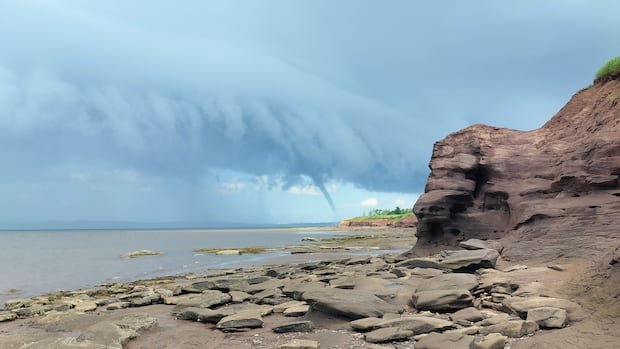

A tour operator, Laura MacNeil, has been organizing shoreline excursions in the vicinity of Vernon Bridge in Prince Edward Island for a span of six years.
Typically focusing on showcasing the Island’s fossil locations and ancient past, MacNeil’s group encountered a unique natural spectacle this past Saturday morning.
Observing ominous dark clouds in the distance, MacNeil and her group hurried back to avoid an impending downpour.
During their return journey to the parking area, passing by a cliff, MacNeil noticed a waterspout in the far-off horizon. Subsequently, a second waterspout emerged at a distance estimated to be between one to two kilometers from the shore.
Expressing her excitement, MacNeil shared, “I started honestly freaking out, I thought it was so cool. I was just so thrilled to witness such a remarkable natural occurrence. It was pure excitement.”
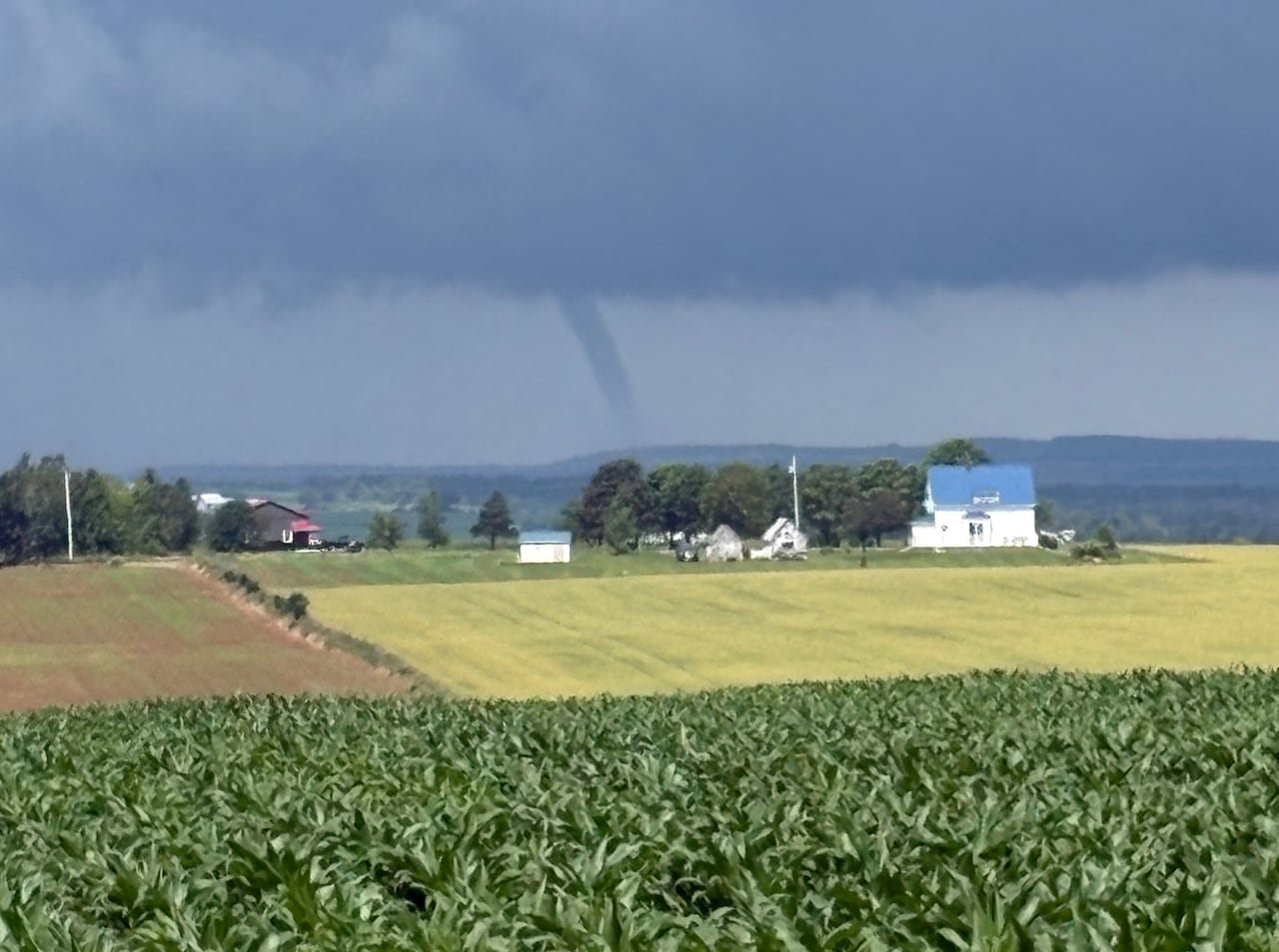
The Northern Tornadoes Project, a research team monitoring severe weather occurrences across Canada, verified that the event over the weekend was indeed a tornado. Since it originated over water, it is classified as a waterspout by meteorologists.
Assigned an “EF0-Default” rating on the Enhanced Fujita scale by the group, it was noted on their website that this rating was due to the absence of any structural damage caused.
Director of the Northern Tornadoes Project, Dave Sills, remarked, “We strive to identify and evaluate every tornado occurrence in Canada, but we recognize there are many weak tornadoes like this one where luck plays a part in spotting them.”
Sills added, “It managed to persist long enough to generate some spray over the water, indicating fairly strong winds. It had the potential to cause damage if it had reached the shore, but fortunately, it did not.”
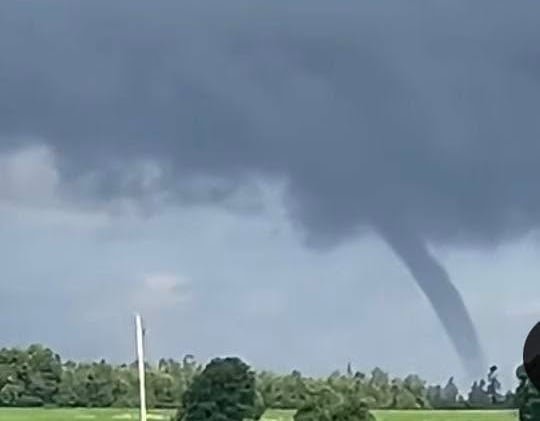
CBC meteorologist Jay Scotland pointed out distinctions between traditional tornadoes and the one that occurred in P.E.I. over the weekend.
Scotland stated, “Unlike conventional tornadoes, waterspouts and landspouts are generally not associated with strong, rotating thunderstorms, so they tend to be weaker and shorter-lived.”
He highlighted that landspouts can form even on seemingly fair-weather days due to localized atmospheric instability, such as a strong sea breeze or a shifting weather front.
Josh Coles, traveling between Belfast and Orwell en route to Charlottetown, witnessed the tornado on Saturday.
Pausing to observe, Coles watched the tornado grow, shrink, and eventually dissipate over a span of about five minutes.
Reflecting on the event, Coles mentioned, “Suddenly it was just gone. Maybe about five or 10 minutes later, we experienced a heavy downpour of rain, followed by a return to a sunny day.”
Although Coles had not witnessed such an event before, he had heard of similar occurrences.
MacNeil recalled observing waterspouts off the south shore of P.E.I. roughly two decades ago, but they were significantly farther from the shore.
Upon reviewing the photos and videos captured, MacNeil realized that the twin funnels were closer than initially perceived.
Expressing her awe, MacNeil stated, “This is probably the closest I will ever be to some tornado-like cyclones, which is just absolutely amazing.”
She added, “This will definitely be remembered as