

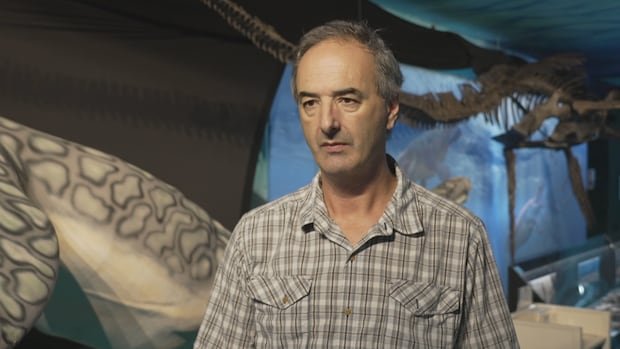

The Canadian Fossil Discovery Centre in Morden, Manitoba, has unveiled its latest exhibit showcasing the Styxosaurus, a long-neck plesiosaur from the Cretaceous period. The exhibit features reconstructed large models of the ancient marine reptile, which was discovered in 1983 during mining activities at North Cox farm near Miami, Man. Using 3D technology, over 400 bones were printed and assembled to recreate the complete skeleton, with artificial intelligence utilized to create a lifelike sculpture of the Styxosaurus.
Measuring up to 12 meters in length and weighing over 4,000 kilograms, the Styxosaurus had a distinctive anatomy, with its long neck accounting for half of its body length and its eel-like head adorned with sharp teeth for hunting prey. This species once inhabited the Western Interior Seaway, an ancient sea that divided North America and covered regions now part of the Prairies.
Visitors, like twelve-year-old Jorja Doerksen, are fascinated by the exhibit, with Doerksen expressing her admiration for the skeletons and skin model displayed. The young visitor had never heard of a Styxosaurus before but found it intriguing and particularly enjoyed learning about the creature’s discovery in Manitoba. She drew parallels between plesiosaurs and the mythical Loch Ness monster, appreciating the exhibit’s educational value.
To engage visitors, the exhibit includes a suggestion box for naming the Styxosaurus. Paleontologists commonly assign nicknames to specimens, and the selected name will be announced at the end of the summer, with the winner receiving a themed prize. Doerksen proposes the name “Apollo,” drawing inspiration from Greek mythology as the Styxosaurus is named after the River Styx.