

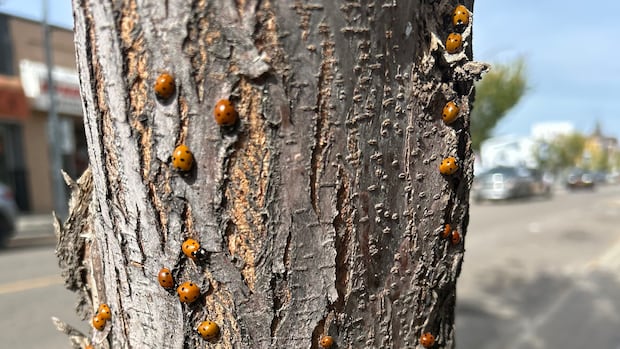

This month, ladybugs are making a significant appearance throughout Saskatchewan as they prepare for hibernation, according to specialists.
“Insects experience cycles of population increases and decreases, and it seems we are currently witnessing a ladybug surge,” stated Georgiana Antochi-Crihan during her conversation with Saskatoon Morning host Candice Lipski.
Antochi-Crihan serves as the entomologist for the City of Saskatoon. She explained that to comprehend the rise in ladybug numbers, one must consider smaller factors.
“Much of this correlates with the availability of food sources for them,” she noted.
Ladybugs primarily consume aphids, scale insects, mealybugs, and various other pests that affect agriculture.
Ashley Thompson, however, has not observed a significant increase in ladybug numbers this year in Regina, although she mentioned an abundance of aphids in the area.
“This year, we saw a substantial aphid population, which naturally enhances the survival chances of ladybugs,” remarked Thompson, who manages parks technical services for the City of Regina.
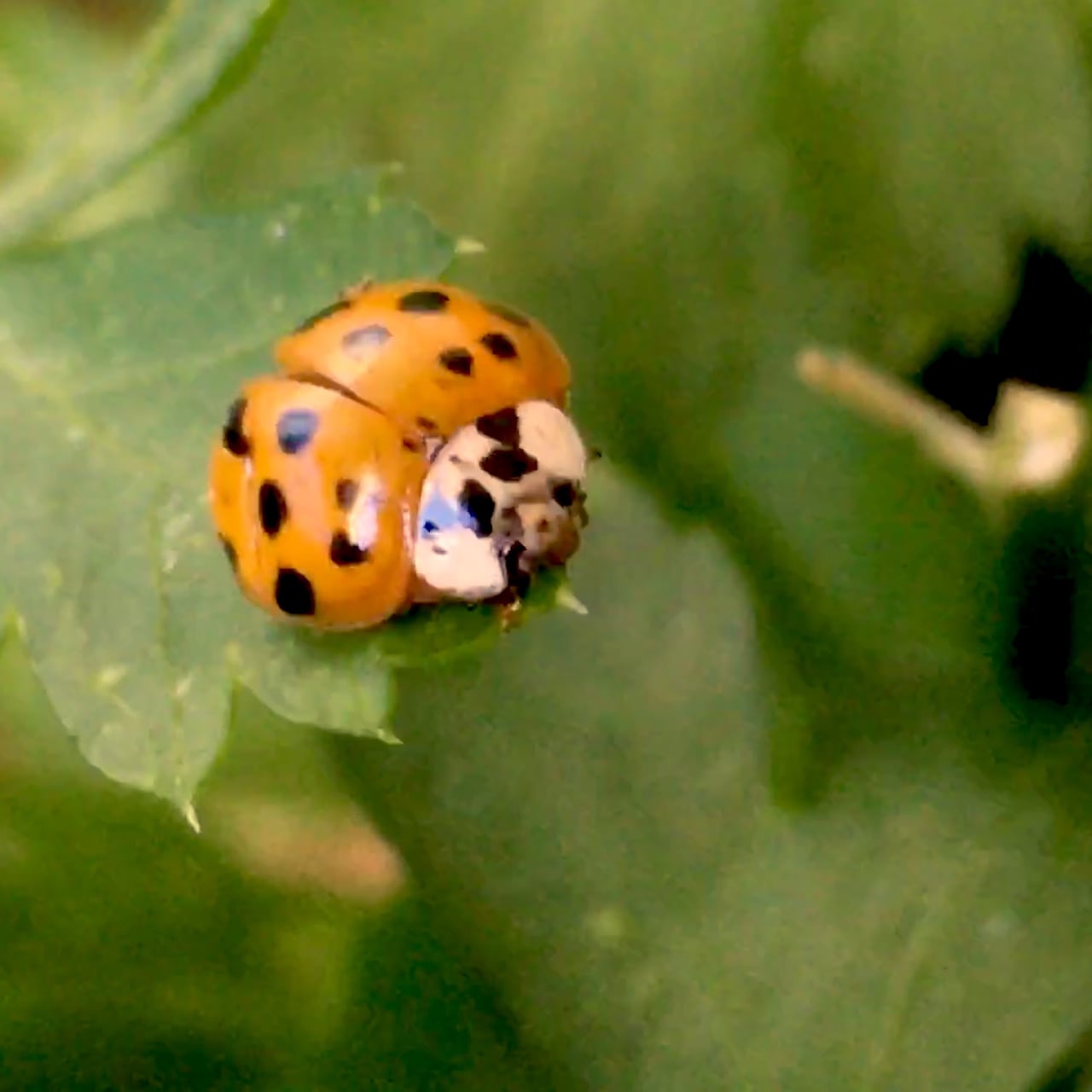
A ladybug waits on an aphid infested leaf. (David Horemans/CBC)
A similar rise in aphid numbers was also noted by Vesna Fa this past summer in North Battleford.
“I spend a lot of time in my garden, and I’ve noticed a high presence of aphids along with various predatory insects, which I believe is what draws ladybugs,” she shared.
Fa is the executive director of Midwest Food Resources, a non-profit organization focused on food security operating in North Battleford, Lloydminster, Meadow Lake, and Turtleford.
“Ladybugs are beneficial. So, please don’t harm them or use pesticides against them,” Fa advised.
-
To swat or not? These scientists suggest we rethink our fear toward insects
-
Ladybugs are critical critters in the garden, but warmer winters could wipe them out
Candace Savage concurred that the ladybug population in the province deserves recognition for their ecological contributions. She chairs Wild About Saskatoon, a volunteer group dedicated to promoting biodiversity.
Antochi-Crihan pointed out that there are around 75 species of ladybugs found in Saskatchewan, both native and non-native. The seven-spotted lady beetle, the most prevalent, can be recognized by the seven distinct spots on its back.
“Providing native plants is crucial, as well as fostering these delightful non-native species. More importantly, we must create habitats for the diverse range of creatures that are naturally present here,” Savage emphasized.

Host Candice Lipski talks with city entomologist Georgiana Antochi-Crihan on why we are seeing so many ladybugs right now.
Thompson believes that the current ladybug sightings in Regina can be attributed to their imminent hibernation.
“Typically, we notice more of them during this time as they seek warmth and begin gathering for winter, often clustering in sheltered spots against buildings,” Thompson explained.
Antochi-Crihan mentioned that ladybugs have developed a unique mechanism to endure the frigid temperatures of winter on the prairies.
“This is largely due to the internal substances they produce. Some ladybugs generate antifreeze-like compounds, and they increase production of these as fall approaches,” Antochi-Crihan added.
Next spring, ladybugs are expected to emerge in large numbers as they come out of hibernation.