

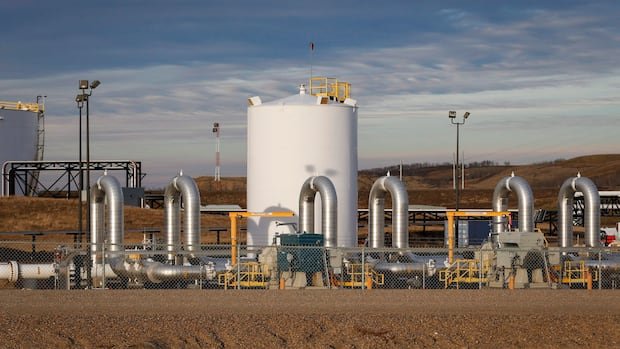

The U.S. Department of Justice has come to an agreement with South Bow Corp., a pipeline company, concerning a rupture in the Keystone pipeline in 2022 that resulted in the release of nearly 13,000 barrels of oil in northern Kansas. As part of the settlement, the Calgary-headquartered company will pay a $26.9 million US civil penalty for alleged violations of the Clean Water Act.
Additionally, South Bow has committed to investing approximately $40 million US in preventive measures to avoid similar incidents in the future. Moreover, the company will allocate $3 million US towards state natural resource restoration projects to address violations of state regulations.
The Justice Department highlighted that this spill was among the largest inland oil spills in recent times and the most significant from the Keystone pipeline network, which stretches from Hardisty, Alberta, to Port Arthur, Texas. Adam Gustafson, deputy assistant attorney general, emphasized the importance of the company’s pledged efforts to prevent future leaks, stating that pipeline leaks, albeit infrequent, can escalate rapidly.
Jeffrey Hall, assistant administrator at the U.S. Environmental Protection Agency, stressed the vital necessity of proper pipeline maintenance, noting the extensive impact of the oil spill on land and water, requiring substantial cleanup and remediation efforts. The Justice Department reported that the spill resulted in crude oil covering Mill Creek bank-to-bank for 5.6 kilometers from the site of the rupture, leading to the death or injury of over 2,700 animals.
South Bow stated that it took proactive corrective actions even before receiving formal directives from U.S. authorities, including completing site cleanup by February 2024. The company’s spokesperson, Sara Hunter, mentioned that South Bow has conducted inspections on nearly 3,400 kilometers of the Keystone system and performed over 70 verification digs to ensure the line’s integrity.
Furthermore, South Bow has employed advanced technologies to conduct in-line inspections on more than 19,000 kilometers of pipe and conducted 400 field excavations for assessing and repairing pipeline conditions. Hunter emphasized the company’s ongoing commitment to the secure and reliable operation of its pipeline system while continuously enhancing pipeline integrity.
The pipeline was under the ownership of TC Energy Corp. at the time of the spill, with the oil pipeline segment later becoming part of South Bow in late 2024. The Keystone system has experienced previous spills, with an incident in April 2025 resulting in an estimated 3,500 barrels of oil leaking onto farmland in North Dakota. South Bow intends to expand its cross-border crude pipeline system, having called for bids for the Prairie Connector project this spring, aimed at utilizing unused pipeline infrastructure from the discontinued Keystone XL expansion initiative to connect with a proposed pipeline by Bridger Pipeline LLC from the Canada-U.S. border to Wyoming.