

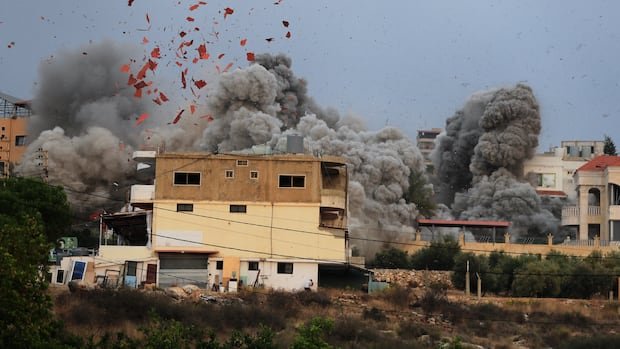

Israeli warplanes conducted airstrikes in various southern Lebanese towns, intensifying their frequent attacks on the region. The bombings defied a ceasefire established in November 2024 and came shortly after Hezbollah urged the Lebanese government not to engage in negotiations with Israel.
Israeli military spokesperson Avichay Adraee advised residents in Tayba, Tayr Debba, and Aita al-Jabal to evacuate 500 meters away from targeted residential buildings suspected of being utilized by Hezbollah. Subsequently, warnings were issued for Zawtar al-Sharqiyah and Kfar Dounin. The Lebanese civil defense agency assisted in evacuating the areas, with most residents complying before the strikes. Nonetheless, Lebanon’s health ministry reported one person injured during the attacks, with a previous strike on Thursday resulting in one fatality.
The Israeli military stated that the airstrikes targeted Hezbollah’s military infrastructure, specifically “weapons storage facilities” concealed within civilian-populated zones. The military accused Hezbollah of enhancing its capabilities nearly a year after the ceasefire was initiated with U.S. mediation. Notably, Hezbollah refrained from launching attacks on Israel since the ceasefire agreement was enforced.
The airstrikes on Thursday led to the destruction of an ironworks business in Abbasiyeh, a town in southern Lebanon. The owner, Ahmad al-Kayyal, highlighted the impact on several households supported by the business, emphasizing the essential services provided by the blacksmith shop.
Lebanon has witnessed a significant death toll and numerous injuries resulting from Israeli military actions post-ceasefire, as reported by the country’s health ministry and the U.N. human rights office. Israeli government spokesperson Shosh Bedrosian reiterated the commitment to safeguarding national borders and upholding the ceasefire agreement with Lebanon.
Tensions have heightened in Lebanon amid concerns of potential extensive aerial bombardments by Israel, particularly following warnings of action against Hezbollah if disarmament efforts were not intensified. Lebanese President Joseph Aoun expressed openness to peaceful negotiations but criticized Israel’s aggressive stance, emphasizing the need for a negotiated settlement to resolve the ongoing conflict.
Lebanese authorities, led by Prime Minister Nawaf Salam, convened in Beirut to review plans aimed at disarming Hezbollah and other non-state armed groups. President Aoun has condemned Israel’s military actions and its presence on Lebanese territories, instructing the army to confront any incursions. He underscored the recurrent pattern of Israeli aggression whenever Lebanon considers negotiation initiatives.
Hezbollah, maintaining both military and political branches, asserted its right to resist occupation and extended support to the Lebanese army. The group clarified its adherence to the ceasefire while rejecting political dialogues with Israel. Despite suffering substantial losses during Israel’s previous air campaign, Hezbollah’s leader reiterated the group’s readiness to confront challenges despite limited capacities.
Both sides have accused each other of violating the ceasefire agreement that concluded the recent Israel-Hezbollah conflict. The conflict originated from Hamas-led attacks on Israel in October 2023, escalating into a full-scale war by September 2024.
The U.S. Treasury announced new sanctions targeting financial operations facilitating fund transfers from Iran to Hezbollah. These measures aim to curb money laundering activities supporting Hezbollah through various channels within Lebanon’s cash-based economy.