

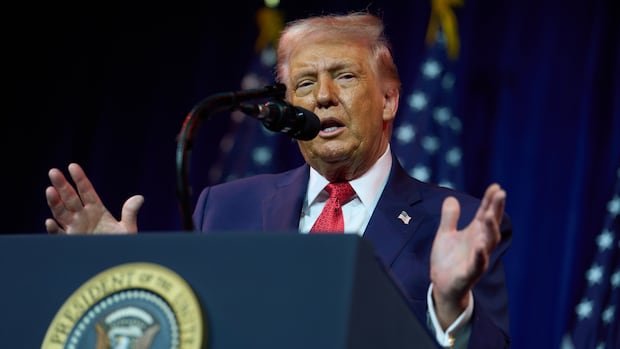

The growing aggressive stance of U.S. President Donald Trump on potential acquisitions like Greenland and involvement in Venezuela raises concerns about the White House’s intentions towards Canada. The administration’s recent actions align with its pledge to reinforce American dominance in the Western Hemisphere as outlined in a new national security strategy.
Despite Greenland being a semi-autonomous territory of Denmark, a NATO ally, the White House has not ruled out military force as an option to acquire it. Trump has also hinted at potential intervention in Colombia and against Mexican drug cartels. Speculation about the possibility of military action against Canada, previously dismissed as far-fetched, is now being deliberated.
Notable figures, including former UN ambassador Bob Rae, have expressed apprehension about the potential threat to Canadian sovereignty. Adam Gordon from the Cascade Institute at Royal Roads University highlights concerning signs indicating a real risk of the Trump administration resorting to military pressure against Canada. He emphasizes the need for preparedness in the face of such possibilities.
Gerald Butts, an advisor to former Canadian leaders, predicts that the administration may leverage various tactics in trade negotiations with Canada but does not see military intervention as a likely scenario. The U.S.’s interest in Greenland could impact Canada’s Arctic sovereignty, potentially leading to an increased American military presence in the region.
Experts caution against jumping to conclusions about imminent military action but acknowledge the challenges Canada faces from the Trump administration. Collaborative efforts with allies like Canada, Greenland, and Denmark are suggested as a more constructive approach to address security concerns in the Arctic region.
In light of rising tensions and territorial ambitions, it is essential for Canada to assert its Arctic presence to deter external pressures and maintain control over its waters. The need for strategic partnerships and diplomatic dialogue to address security threats is emphasized, steering away from coercive measures like annexation.