

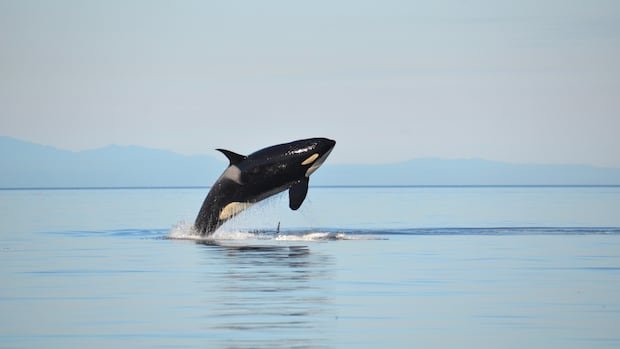

A non-governmental organization in Nova Scotia has been unsuccessful in its attempt to relocate two killer whales from France to a coastal sanctuary built for retired marine park whales. The Whale Sanctuary Project confirmed on Friday that the French government has chosen to transfer the orcas – Wikie and her son Keijo – to Loro Parque zoo in Spain’s Tenerife Island, instead of the planned refuge in Wine Harbour, N.S.
The setback comes after more than six years of planning for a 40-hectare enclosure in Nova Scotia, comparable in size to 50 football fields, complete with floating nets to house the whales. Experts argue that captive whales and dolphins lack essential survival skills to be reintroduced into the wild.
Marineland Antibes in France, where the orcas were previously held, ceased operations in January 2025 to adhere to a 2021 French law prohibiting the captivity of whales and dolphins for entertainment purposes. A similar ban was enacted in Canada in 2019.
In response to the decision to relocate the whales to Spain, the Whale Sanctuary Project expressed disappointment, emphasizing that the move contradicts the spirit of the law aimed at ending the use of whales and dolphins for entertainment and breeding. The CEO of the organization, Charles Vinick, criticized Loro Parque for its performance-based activities and breeding practices.
Despite the setback, construction plans for the sanctuary in Nova Scotia are ongoing. While the provincial government approved the $15-million project in October, finalizing the necessary permits and funding remains pending. The Whale Sanctuary Project remains optimistic about completing the sanctuary and providing long-term care for whales transitioning out of captivity, aligning with the global shift away from marine mammal captivity.
This development underscores the challenges faced by organizations striving to improve the welfare of captive marine animals amid evolving legislation and differing approaches to conservation and animal welfare.