

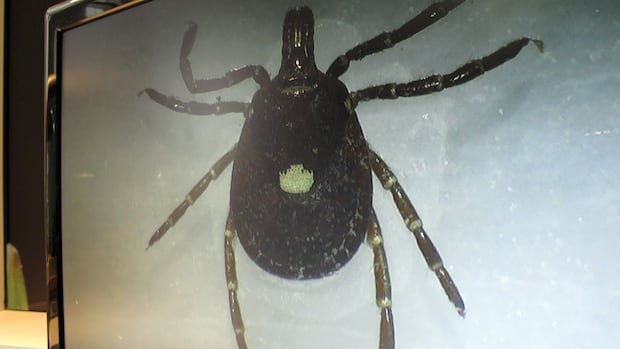

A slow and steady invasion of ticks carrying dangerous pathogens from the United States is posing a threat to Canadians. The Government of Canada reports over 40 types of ticks in the country, with the blacklegged tick being the most well-known for transmitting Lyme disease. To address this issue, a new Canadian Tick Research and Innovation Centre has been established at Acadia University in Wolfville, N.S., under the leadership of associate professor Nicoletta Faraone.
The center aims to understand, prevent, and manage tick-borne diseases, as there is currently no vaccine for Lyme disease. Scientists warn that various tick species carrying harmful pathogens are migrating towards Canada at a rate of about 50 kilometers per year, with some species already sighted but not yet established in Nova Scotia. Of particular concern is the lone star tick, known for causing severe meat allergies in humans.
In Maine, where the lone star tick is prevalent, individuals like Patty O’Brien-Carrier have experienced severe allergic reactions to meat after being bitten. The establishment of the Canadian research facility allows for the study of ticks like the lone star tick and the Asian long-horned tick, which poses a threat to cattle by causing anemia. Farmers, such as Tim Marsh from Poplar Grove, N.S., are taking precautions to protect their herds from tick-related illnesses.
Faraone emphasizes the importance of tick prevention measures and the need for further product development to combat tick-borne diseases effectively. Simple actions like wearing protective clothing and conducting regular tick checks can help reduce the risk of tick bites. Research on tick behavior and pathogens is crucial for preparedness against diseases like the Powassan virus, which is carried by ticks and can be fatal.
As the threat of ticks continues to evolve, staying informed and taking preventive measures are essential for safeguarding against tick-borne illnesses.