


After more than a year since the inception of the Buy Canadian movement, major grocery chains Loblaw and Sobeys are under increased scrutiny for “maple washing,” a practice involving the promotion of imported goods as domestically produced.
In January, the Canadian Food Inspection Agency (CFIA) imposed $10,000 fines on two Loblaw-owned stores for maple washing violations. Subsequently, two other Loblaw-owned stores received formal warnings for similar infractions a month later, as reported by CBC News.
Sobeys has also come under CFIA’s radar, with the federal food regulator receiving multiple complaints about the grocer’s maple washing practices. The investigation into Sobeys’ advertising practices overseen by the head office concluded without fines due to corrective actions taken, according to CFIA.
Notably, Sobeys seems to have phased out the red maple leaf symbol introduced last year to highlight Canadian products in its stores. Recent visits by CBC to nine Sobeys and Safeway locations revealed a disappearance of the symbol, leaving products like Tim Hortons coffee and Real Dairy ice cream without a marker indicating their Canadian origin.
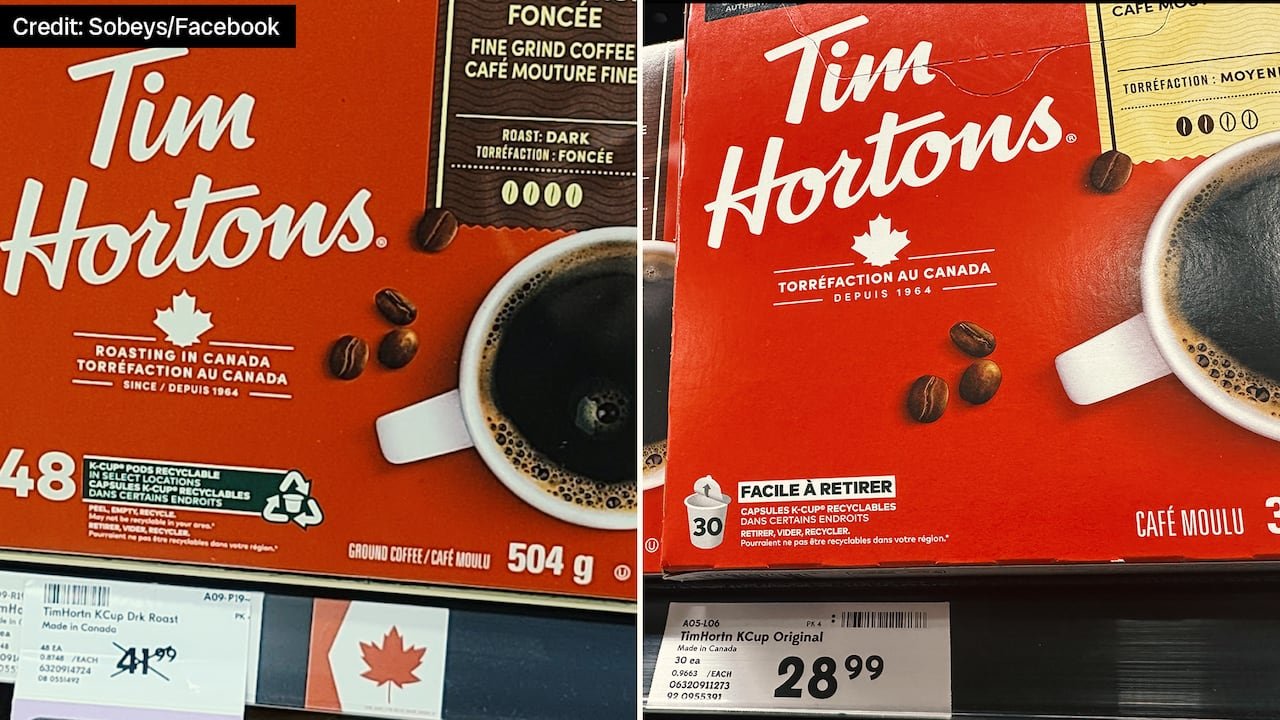
Despite not responding to requests for comment, Sobeys’ parent company, Empire, informed The Canadian Press in late March that it started removing some Canadian signage under the belief that consumers can discern the origin of their food.
Consumer advocate Jay Jackson suggests that the CFIA investigation, ongoing since March, may have prompted Sobeys to discontinue the symbol in a bid to protect itself under closer government scrutiny.
As instances of maple washing accumulate, Jackson notes that disgruntled consumers are calling for stricter enforcement by CFIA against retailers violating regulations on Canadian product claims.
Since the beginning of 2025, CFIA has identified 127 cases of retailers misleading consumers by promoting imported goods as Canadian. However, only two fines have been issued thus far, both to Loblaw stores.
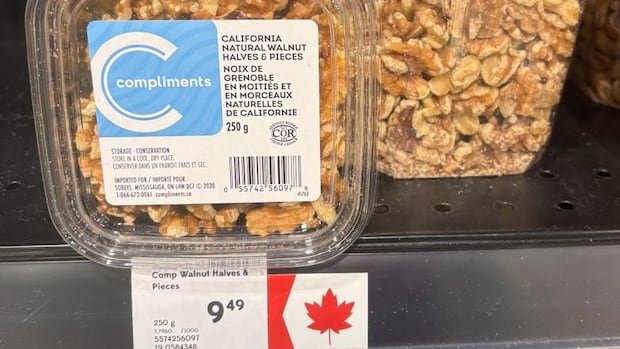
California walnuts promoted as Canadian
The lack of penalties disappoints Steve Palmer, who has filed multiple complaints with CFIA over maple washing at Loblaw and Sobeys-owned stores in southwest Nova Scotia. Palmer expressed dismay over the absence of fines despite instances like Egyptian oranges and California walnuts being misrepresented as Canadian products.
Palmers’ persistence led to resolutions of the orange and nut issues following CFIA interventions at Sobeys. He emphasizes that the lack of enforcement sends a message to retailers that they can flout labeling regulations with minimal consequences.
According to federal regulations, food labels and in-store signage must be accurate and non-deceptive. CFIA spokesperson Patrick Girard mentioned that fines are determined based on various factors, including risk level, potential harm, and the offender’s history.
In January, Loblaw-owned stores in Toronto received $10,000 fines for mislabeling foreign products as Canadian. Subsequent warnings were issued to other Loblaw-owned stores in February for similar violations.