

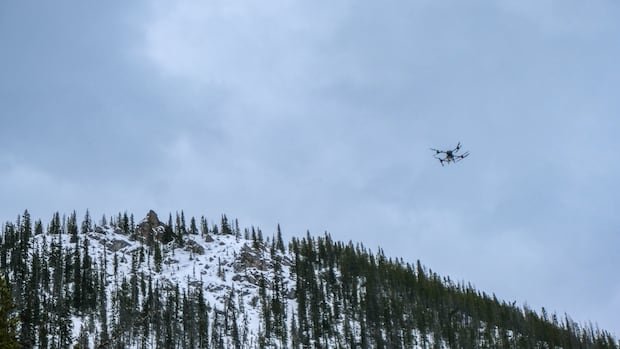

A Canadian company has introduced a novel approach to avalanche control by utilizing drones instead of traditional methods like artillery weapons or helicopter explosives. Aerial Vehicle Safety Solutions Inc. (AVSS) obtained government approval last year to experiment with its SnowDart system for managing avalanches. This winter, AVSS successfully trialed the technology in Jasper National Park, where a drone was deployed to transport an explosive up a mountain, dropping it onto the slope for remote detonation. Co-founder of AVSS, Josh Ogden, emphasized that this method adds another effective tool to the existing arsenal for avalanche control.
In Canada, various techniques have historically been employed for avalanche control, including the use of 105 mm howitzer guns by the Royal Canadian Horse Artillery of the Canadian Armed Forces, where shells are fired onto mountain slopes to trigger avalanches. Additionally, Parks Canada utilizes helicopters to strategically drop explosives for avalanche mitigation. Remote trigger stations are also strategically positioned on slopes. Ogden highlighted the potential advantages of drones, particularly in inaccessible areas where artillery guns or trigger stations are impractical. Drones can offer a cost-effective alternative to using helicopters for avalanche control.
The recent winter season witnessed heightened avalanche control activities in Western Canada, with Parks Canada managing a significant stretch of Highway 1 through Glacier National Park in British Columbia, threatened by 135 avalanche paths. Due to exceptional snowfall in December and atmospheric conditions in March, the highway faced prolonged closures for avalanche control, totaling 191 hours this winter compared to the average of 79 hours in a typical winter.
The use of drone technology is gaining traction across various industries, from bridge inspections to emergency responses and food deliveries. While drones present a promising avenue for managing avalanche risk, Deryl Kelly from Parks Canada cautioned that they should not be solely relied upon for avalanche control due to weather dependencies. Nonetheless, ongoing testing is planned for the next winter season, with potential expansion to other mountainous regions in Canada. Brian Rode, vice-president of Marmot Basin ski resort in Jasper National Park, expressed optimism about the prospects of drone-based avalanche control, highlighting the resort’s interest in monitoring the technology’s progress. In the interim, the ski resort will continue utilizing traditional explosive charges for avalanche management.