

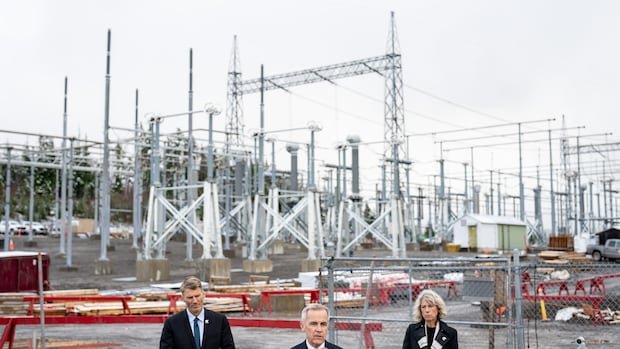

Prime Minister Mark Carney revealed his plan this week to expedite a new set of projects through the government’s Major Projects Office (MPO) as part of his strategy to reduce Canada’s economic dependency on the United States. The recent announcement prioritized multibillion-dollar energy and natural resources initiatives, raising questions about the implications of MPO referrals.
The terminology used by the government has led to some confusion, as Carney has only referred to projects as being of “national importance” or “national significance” thus far, without applying the controversial “national interest” label. This label would enable the federal cabinet to bypass certain regulations in the interest of boosting domestic economic growth.
While many projects under MPO review are already in progress, the purpose and outcomes of this process remain uncertain. Carney emphasized that a project’s referral to the MPO does not equate to automatic approval but rather signifies government efforts to facilitate progress while involving various stakeholders, notably First Nations communities.
The establishment of the MPO aims to accelerate project development in Canada amid trade uncertainties caused by U.S. tariffs. The office collaborates with project proponents, provinces, territories, and Indigenous groups to navigate permitting processes, address regulatory obstacles, structure financing, and mitigate project risks.
Dawn Farrell, the President and CEO of the MPO, affirmed that the office is committed to ensuring projects are completed “on time and on budget.” Notably, the MPO is streamlining the permitting process for projects like the Crawford nickel mine in Ontario, aiming to significantly reduce the time required for project completion.
Additionally, the MPO is working in conjunction with the Canada Infrastructure Bank and the Canada Growth Fund to provide financial certainty for projects. For instance, the Canada Infrastructure Bank is set to lend $139 million to B.C. Hydro’s North Coast Transmission Line project to facilitate its development.
Furthermore, the MPO may assess projects for potential designation under the “national interest” provision of Bill C-5, allowing selected projects to bypass customary legal requirements. This provision has sparked debate and criticism from various quarters, citing concerns about democratic principles and environmental impacts.
Despite Carney’s efforts to expedite project approvals, some, like Conservative Leader Pierre Poilievre, remain skeptical of the MPO’s effectiveness. Poilievre criticized the creation of an additional bureaucratic layer and questioned the office’s ability to streamline development processes effectively.
The MPO is currently reviewing six new projects and one concept, including mining, energy, and infrastructure developments across various regions in Canada. These initiatives, combined with the previously recommended projects, represent a significant economic boost to the country, totaling $116 billion according to government estimates.