

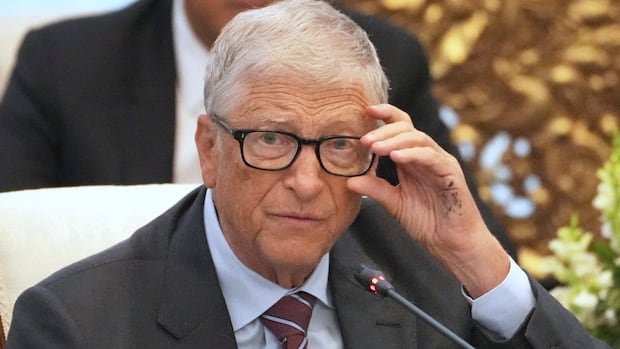

Over the last week, several attention-grabbing headlines have circulated, such as “Bill Gates changes stance on climate change,” “Bill Gates retracts climate change statements, causing uproar among environmentalists,” and “Bill Gates abandons fight against climate change.” However, did the Microsoft co-founder and philanthropist truly downplay the significance of climate change?
The controversy stemmed from a poorly timed memo released by Gates on the same day that Jamaica was devastated by a powerful Category 5 hurricane. In the memo, Gates challenges the prevailing doomsday narrative of climate change, emphasizing that while it will have severe consequences, it will not spell the end of humanity. He suggests that the climate discourse overly fixates on temperature and emissions, diverting resources from addressing critical issues like poverty and hunger.
This perspective has stirred reactions among climate scientists and skeptics alike. Even U.S. President Donald Trump claimed victory, stating that Gates had admitted being wrong about climate change. However, Gates clarified that Trump misinterpreted the memo, underscoring the importance of addressing climate change to enhance people’s lives.
During a panel discussion organized by Covering Climate Now, Katharine Hayhoe, a climate scientist, echoed Gates’s sentiment, emphasizing that climate change should not be viewed as an existential threat. Zeke Hausfather, a research scientist at Berkeley Earth, concurred, highlighting that while climate change is crucial, it shouldn’t be viewed in isolation as an existential threat.
Hayhoe further elaborated that climate change is interconnected with other social issues like poverty and hunger, and Gates’s focus on prioritizing interventions for the vulnerable was contentious within the climate community. Despite the controversy, Gates’s message is perceived as nuanced, advocating for a balanced approach considering limited resources and global aid cutbacks.
Experts emphasize that climate change disproportionately impacts impoverished communities, exacerbating challenges such as food insecurity, disease outbreaks, and infrastructure damage. Mitigating and adapting to climate change is vital to protect vulnerable populations, as they bear the brunt of its effects despite contributing minimally to greenhouse gas emissions.
In conclusion, while Gates’s stance sparked debate, the core message underscores the need for a comprehensive approach to address climate change while supporting vulnerable communities worldwide.
[Source](https://www.cbc.ca/news/science/bill-gates-memo-climate-change-9.6967961)